Options Trading for Dummies Review (Joe Duarte, 5th Ed)

Joe Duarte’s Options Trading for Dummies is on its 5th edition and still rated 4.4 out of 5 on Amazon, which makes it one of the few options books that beginners reliably finish. The question this review answers: when does it stop being enough, and what should you read or do next? Below is the honest take, including the parts of the book most reviews skip.
Key Takeaways
- Best for: complete beginners who want plain-English coverage of calls, puts, spreads, and the Greeks before they place a single trade.
- Where it falls short: there is almost no journaling discipline, no backtesting workflow, and no broker-specific platform walkthrough, all of which active traders need.
- Pair it with: a structured trading journal that logs every option position so the book’s strategy lessons turn into measurable wins instead of just notes.
Reading the book is step one. Logging every option position you place after, with implied volatility at entry, hold duration, and the Greek mix at fill, is what turns the chapters into measurable progress. The Financial Tech Wiz Trading Journal captures that data automatically.
Start your trading journalWho Joe Duarte Is and Why His Background Matters
Joe Duarte, MD has been writing about markets for more than two decades. He is the author of Trading Futures For Dummies, Market Timing For Dummies, and the “Joe Duarte in the Money Options” newsletter. Before publishing, he ran River Willow Capital Management and held a money-management role that exposed him to real risk-taking under client mandates, not just theory. That background shows up in the book: the writing leans pragmatic, not academic, and most chapters tie a concept back to a position size or a stop level rather than leaving readers in the abstract.
The 5th edition is a meaningful update over earlier printings. It expands the section on volatility and adds context for the post-2022 options boom (record retail flow into weekly options, the rise of zero-day-to-expiration trading on indexes). Readers coming to options for the first time in 2026 will find the framing roughly current, not stuck in pre-pandemic vocabulary.
What the Book Actually Covers
The book breaks options content into five practical buckets:
| Bucket | What you learn | Strategies named in the chapters |
|---|---|---|
| Foundations | Calls, puts, strike, expiration, intrinsic vs extrinsic value | Long calls, long puts |
| Risk and the Greeks | Delta, gamma, theta, vega, the volatility smile | How each Greek changes a position’s P&L curve |
| Income and yield | Selling premium, position sizing for income | Covered calls, cash-secured puts, short strangles |
| Hedging | Using options to protect existing stock positions | Protective puts, collars |
| Multi-leg structures | Combining contracts for defined risk | Vertical spreads, iron condors, iron butterflies, straddles, calendar spreads |
The strongest chapters are the foundations chapter (because Duarte refuses to skip the math on intrinsic vs extrinsic value) and the Greeks chapter (because every concept gets a small worked example, not just a definition). The weakest chapters are the income and yield sections, which read more like a tour of strategies than a workflow you could pick up and run on Monday morning.
For a head-to-head with another classic options book, see the Options as a Strategic Investment review. McMillan’s book covers similar ground at far greater depth and is the natural follow-on once Options Trading for Dummies feels too light.
What Real Readers Praise
Across the 500+ Amazon ratings (4.4 average) and the smaller pool of long-form reviews on Substack, Goodreads, and Shortform, readers consistently praise three things:
- Plain-English glossary work. Duarte will not move past a term until he has explained it in non-jargon language. For traders coming from a stock-only background, the early chapters do real work shrinking the cognitive load.
- Worked numerical examples. Most chapters include “if XYZ is trading at $50 and you buy the $52 call for $1.20” walk-throughs. Readers report these examples are the moment the abstract Greeks finally clicked.
- Risk framing. The book repeatedly comes back to position sizing and defined-risk structures, rather than implying that selling premium is free money. That framing is rarer than it should be in introductory options content.
The Goodreads reviews split between “this finally made it click” and “I wish I’d read this before my first trade.” For the actual target audience (people about to open an options-enabled brokerage account for the first time), this is the right kind of split.
Where the Book Stops Being Useful
This is the section most reviews skip, and it’s the most useful one for active traders deciding whether to keep the book on their shelf or pass it along.
- No journaling discipline. Duarte covers strategies but does not teach the habit of logging every trade and reviewing it. For options specifically, this is a serious gap: hold duration, implied volatility at entry, and the Greek mix at the time of fill all matter for post-trade analysis, and none of that gets captured if you do not have a journal. A free starting point is the free options trading journal template, which is the simplest way to begin tracking these data points without buying anything.
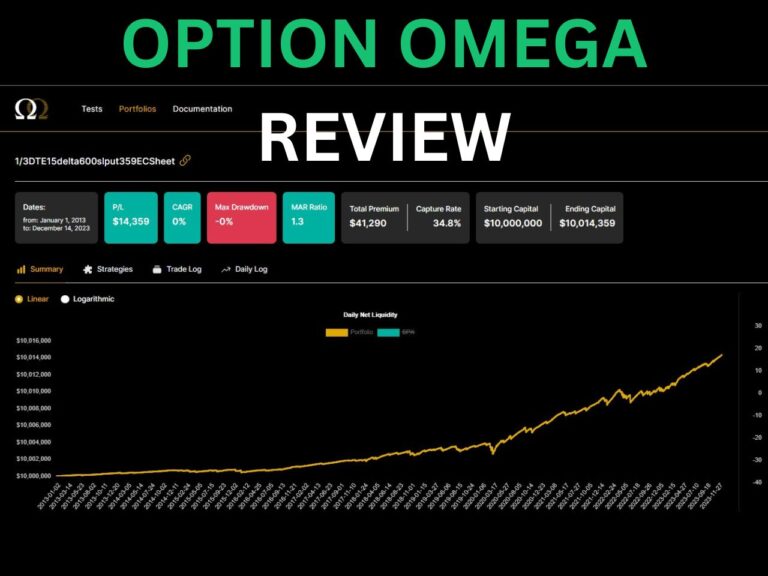
- No backtesting workflow. The strategies in the income and yield chapters (covered calls, cash-secured puts, short strangles) live or die on whether they actually backtested well in your symbols and timeframes. The book offers no playbook for testing a strategy before risking real capital. For options-specific backtesting, the best options backtesting software guide covers the tools that fill this gap.
- No broker-specific platform walkthrough. Beginners typically struggle more with the broker UI than with the strategy itself. The book does not show how to actually place a vertical spread on thinkorswim, Robinhood, or Webull, where most retail readers are trading.
- Light coverage of zero-day-to-expiration (0DTE) options. The 5th edition acknowledges 0DTE exists but does not give it the treatment its actual share of retail volume now demands.
A Google Sheets template built specifically for options trades. Pre-built columns for strategy, strike, expiration, premium, IV at entry, and result. Use it alongside the book’s strategy chapters so the lessons stick.
Get the free templateWho Should Buy This Book and Who Should Skip It
Buy it if:
- You have never placed an options trade and want one consistent reference book to read cover to cover before you do.
- You understand stocks well but find the options chain confusing the first time you open it.
- You want a non-flashy, math-friendly explanation of the Greeks in one place.
Skip it if:
- You have already placed 50+ options trades and are looking for an edge: this is not that book.
- You want strategy backtests, journaling templates, or platform-specific walkthroughs (read the gap section above).
- You are looking for content focused on 0DTE indexes or weekly income strategies (the book treats them as a footnote).
How to Read It So It Actually Sticks
The single biggest predictor of whether a beginner book pays off is whether you log what you do alongside reading it. Most readers finish a book, take zero structured notes, and then make the same mistakes the book warned them about three months later.
A workable workflow:
- Read one strategy chapter at a time.
- Open a paper-trading account on a real broker and place at least one trade in that strategy at the smallest possible size.
- Log every trade with: entry date, expiration, strike, premium paid or collected, the rationale tied back to the chapter, and what you would do differently next time.
- Review the log monthly. Strategies that lose money on paper will lose money with real capital, and you want to know that before scaling.
For step 3, a structured journal beats a spreadsheet because options-specific data (implied volatility at entry, hold duration, Greek exposure) does not slot neatly into stock-trade columns. The Financial Tech Wiz Trading Journal handles this natively.
Companion Resources Worth Pairing With the Book
Three resources together cover the gaps the book leaves open:
- The options trading books guide, which sequences five books from beginner (this one) through pro-level (Natenberg, Sinclair).
- A position-level P&L tool for visualizing each strategy before placing it: the options profit calculator lets you plot risk graphs for spreads, condors, and butterflies in seconds.
- A trading-friendly indicator framework for entries and exits: the best indicators for options trading guide covers the few that actually correlate with options-specific moves (implied volatility rank, expected move, term structure).
FAQ
Is Options Trading for Dummies a good book for complete beginners?
Yes. It is one of the few options books written specifically for readers who have never placed an options trade. The plain-English glossary work, the worked numerical examples, and the consistent emphasis on position sizing make it a low-friction first read. Beginners are the right target audience, and the 4.4 out of 5 Amazon rating across 500+ reviews reflects that.
Which edition of Options Trading for Dummies should I buy?
The 5th edition is the current printing as of 2026 and is the one to buy. It updates the volatility and risk chapters and adds context for post-2022 retail options trends, including the rise of zero-day-to-expiration trading. Earlier editions are still readable but use pricing examples and ETF references that have aged out.
How long does it take to read?
Most readers report finishing the book in 8 to 12 hours of reading time, spread over two to three weeks. Reading one strategy chapter per week and paper-trading that strategy in between typically stretches the experience to four to six weeks, which is the usage pattern that produces the best retention.
Do I need this book if I already trade options?
If you have placed more than 50 options trades and feel comfortable with the Greeks and basic spreads, the book will not change your edge. Move to a deeper text like Options as a Strategic Investment by Lawrence McMillan, or to a workflow-focused resource like a journal that captures implied volatility at entry and a backtesting tool.
What is a better alternative for active options traders?
For active traders, the better path is a structured workflow rather than another beginner book. That means a journal that captures implied volatility at entry, the Greeks at fill, and hold duration, plus a backtesting tool that can validate strategies on your symbols. The Financial Tech Wiz Trading Journal and a dedicated options backtesting tool together cover both gaps.
For a deeper look at which options strategies have the strongest track record for consistent returns, see our overview of best options strategies overview.
Get Your Free Trading Resources
Grab the free trading journal template plus the same tools we use to stay organized, consistent, and objective.
- Free trading journal template
- Custom indicators, watchlists, and scanners
- Access our free trading community
Enter your email below to get instant access.
No spam. Unsubscribe anytime.