The Best Trading Monitors for 2026

Your charts are only as clear as the screen you read them on. The right trading monitor gives you room to watch price action, scan your watchlist, and keep your trade journal open without squinting or alt-tabbing all day. Below are the monitors worth your desk space in 2026, plus the specs that actually matter when you are reading fast-moving charts.
Key Takeaways
- Screen real estate beats raw resolution for most traders. A single 32 to 34 inch ultrawide, or a dual-monitor setup, lets you watch charts, Level 2, and your journal at the same time.
- Panel type and refresh rate matter less than size and clarity for chart reading. A 75Hz IPS panel is plenty unless you also game on the same screen.
- Match the monitor to your setup, not the other way around. Laptop traders want a portable USB-C screen; desk traders can go big with a curved ultrawide or a multi-monitor stand.
A bigger screen is only half the upgrade
A clean monitor setup helps you read the trade. A trade journal helps you understand it. The Financial Tech Wiz Trading Journal tracks your win rate and P&L across every position, broken down by symbol and hold duration, so your new screens show you what is actually working.
Track your trades in the Financial Tech Wiz Trading JournalHow to Choose a Trading Monitor: What Actually Matters
Before you pick a model, decide what you actually need. A trader running three charts and a scanner has different needs than someone watching one ticker on a laptop at a coffee shop. These are the specs that change how your charts read, ranked by how much they matter for trading specifically.
Screen size and real estate
Size is the single most important spec for trading. More screen means more charts, more of your watchlist, and your journal visible at once without stacking windows. For a single screen, 32 to 34 inches is the sweet spot. Go to a 49 inch ultrawide or a dual-monitor setup if you run multiple timeframes or Level 2 alongside your charts.
Resolution: 1080p vs 1440p vs 4K
Resolution controls how much detail fits on the screen. 1080p works on smaller 24 to 27 inch panels, but on a 32 inch screen text starts to look soft. 1440p (QHD) is the practical pick for most trading screens: crisp charts without the scaling headaches 4K can cause in some platforms. 4K is worth it only if you sit close to a large panel and your charting software scales cleanly.
Panel type: IPS vs VA vs TN
IPS panels give the best color and the widest viewing angles, which matters when you glance at a side monitor at an angle. VA panels offer deeper contrast and are common on curved ultrawides. TN panels are cheap and fast but wash out off-angle, so skip them for a multi-monitor setup. For trading, IPS is the safe default.
Refresh rate
Refresh rate is where traders overspend. A 60 to 75Hz panel renders price updates smoothly for charting. 144Hz and higher only matter if you also game on the same screen. Do not pay a premium for a high refresh rate you will not use reading charts.
Curved vs flat
On a wide single screen of 34 inches or more, a gentle curve keeps the edges of your charts at a consistent distance from your eyes and reduces neck movement. On smaller screens the curve adds little. Curves are a comfort upgrade for big single panels, not a requirement.
One ultrawide vs multiple monitors
A single ultrawide gives you a clean, uninterrupted canvas with no bezels cutting across your layout, and one cable to manage. A multi-monitor setup is more flexible and often cheaper per inch of screen, and it lets you dedicate one screen to charts and another to your broker or news. Pick the ultrawide for simplicity, the multi-monitor stand for flexibility and budget.
Connectivity and ergonomics
Check the ports before you buy. Laptop traders want a monitor with USB-C so a single cable carries video and power. Desk traders should confirm enough HDMI or DisplayPort inputs for every device. An adjustable stand or a VESA mount matters more than people expect: a screen at the wrong height costs you focus over a long session.
Ultrawide vs multi-monitor at a glance
| Setup | Best for | Pros | Watch-outs |
|---|---|---|---|
| Single ultrawide (34 to 49 inch) | Clean layouts, simple cabling | No bezels, one cable, immersive | Higher upfront cost, one point of failure |
| Dual or triple monitors | Flexibility, dedicated screens | Cheaper per inch, mix sizes, isolate news/charts | Bezels, more desk space, stand needed |
| Laptop plus portable USB-C screen | Mobile and travel traders | Compact, single-cable, packable | Smaller real estate, fewer ports |
Our Top Trading Monitor Picks for 2026
These five cover the setups most traders land on, from a single big screen to a portable laptop rig. Each pick leads with what it does for your charts. Confirm current pricing and availability on Amazon before you buy, since stock and prices on specific models change over time.
| Monitor | Specs | Amazon Links |
|---|---|---|
| 1. Dell S3222HG | 32″ 1080p 165Hz |  |
| 2. Samsung Odyssey | 49″ DQHD 120Hz | |
| 3. SideTrak Solo Pro | 15.8″ 1080p 60Hz Portable | |
| 4. SAMSUNG CF396 | 23.5″ 1080p 60Hz Curved | |
| 5. Acer Home Office Monitor | 23.8″ 1080p 60Hz Tilt | |
1. Dell S3222HG 32-inch 165Hz Curved Monitor
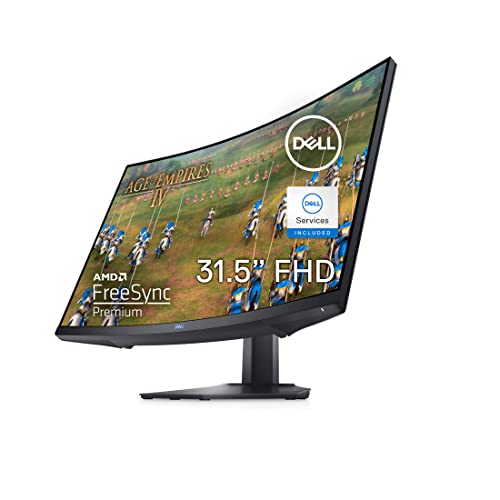
- Display Size: 32 inches
- Resolution: Full HD (1920 x 1080)
- Refresh Rate: 165Hz
- Response Time: 1ms (MPRT)
- Key Features: Curved 1800R screen, sRGB 99% color coverage
Best mid-size single screen. The Dell S3222HG gives you a 32 inch curved panel with room for two or three charts side by side, which is the single biggest upgrade most traders feel right away. The 1800R curve keeps the edges of your layout an even distance from your eyes, and the fast 165Hz refresh and 1ms response handle smooth chart redraws with ease. At 1080p the text is a touch soft up close on a panel this size, so sit back a little or step up to a 1440p screen if you read dense option chains all day.
2. Samsung Odyssey CRG 49-Inch Dual QHD Ultrawide
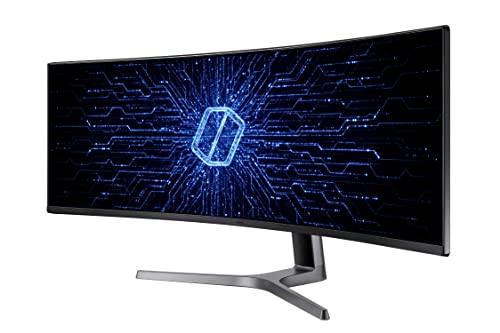
- Display Size: 49 inches
- Resolution: Dual QHD (5120×1440)
- Refresh Rate: 120Hz
- Key Features: Curved screen, AMD FreeSync, G-Sync compatibility
Best premium ultrawide. The 49 inch Samsung Odyssey is a single uninterrupted canvas as wide as two 27 inch monitors, with no bezel cutting across your layout. Dual QHD resolution keeps charts sharp edge to edge, and the deep VA contrast makes candles and indicators pop. This is the screen for a trader who wants Level 2, several timeframes, and a news feed all visible at once without juggling multiple cables. It is a real desk and budget commitment, so it earns its place only if you genuinely run that many windows.
3. SideTrak Solo Pro Portable Monitor

- Display Size: 15.8 inches
- Resolution: (1920×1080)
- Refresh Rate: 60Hz
- Key Features: Portable and convenient for an extra charting monitor
Best portable screen for laptop traders. The SideTrak Solo Pro attaches to your laptop and folds away when you are done, which makes it the natural second screen for anyone who trades on the move. The 15.8 inch IPS panel gives you somewhere to park your charts while your watchlist or broker sits on the laptop display. If a laptop is the core of your setup, pair it with one of the best laptops for trading and this portable screen for a clean two-display rig you can pack in a bag.
4. Samsung 23.5” CF396 Curved Monitor

- Display Size: 23.5 inches
- Resolution: 1920 x 1080
- Refresh Rate: 60Hz
- Key Features: Curved screen, slim design, 4ms response time
Best budget curved monitor. The Samsung CF396 is an affordable way to add a gentle curve and a clean extra screen to your setup. At 23.5 inches and 1080p it is not built to be a single-screen trader’s main display, but it shines in a multi-monitor stack where you want one panel dedicated to a scanner, news, or your order ticket. FreeSync keeps the image steady, and the slim profile and tilt stand make it easy to line up next to your main display.
5. Acer 23.8-inch Frameless Monitor
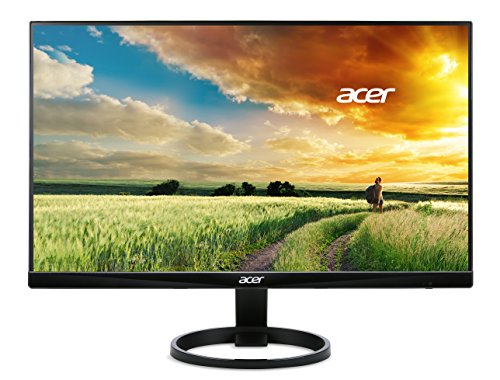
- Display Size: 23.8 inches
- Resolution: 1920 x 1080
- Refresh Rate: 60Hz
- Key Features: Frameless design for easy multi-monitor setup, blue light filter, flicker-less technology
Best for a multi-monitor wall. The Acer 23.8 inch frameless panel is designed to sit shoulder to shoulder with others, so the thin borders nearly disappear when you tile three or four together. It is a 1080p IPS-class screen with a blue light filter and flicker-reduction that earn their keep over a long session. Buy a few of these on a multi-monitor stand when you want maximum screen count per dollar rather than one large premium panel.
Got the screens? Now track the trades
Before you upgrade to a paid tool, start logging your trades for free. Our free trading journal template is a ready-to-use Google Sheet that records every entry, exit, and note, so the charts on your new monitors turn into a track record you can learn from.
Get the free trading journal templatePair Your Screens With the Right Charting Platform
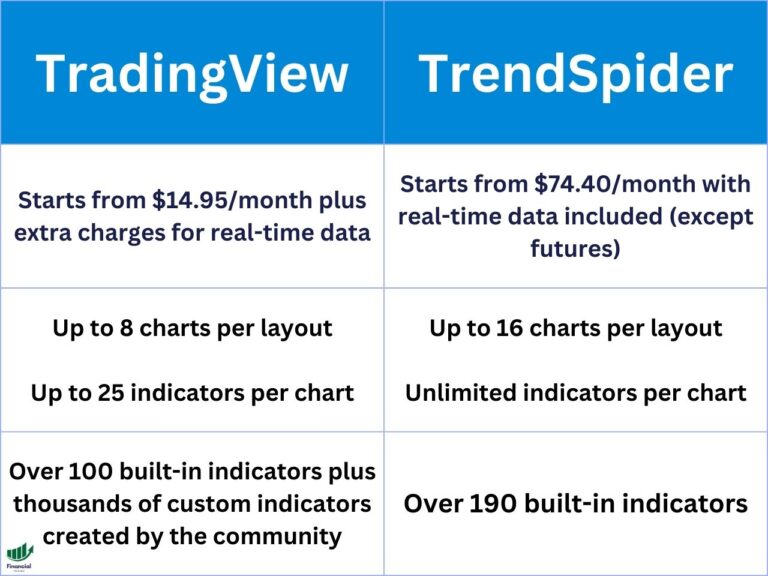
Hardware is only half of a good setup. A clean charting platform is what turns all that screen space into something you can actually read. TradingView remains the go-to for most traders, with deep charting tools, a large library of indicators, and real-time data that scales well across one big screen or a multi-monitor wall. If you are dialing in your charts, our guide to the best TradingView indicators walks through the ones worth adding first.
You can try TradingView free before committing to a paid plan, and use that link for a discount when you are ready to upgrade.
The Best Trading Monitor for You: Bottom Line
The best trading monitor is the one that fits how you actually trade. If you want one screen, a 32 to 34 inch panel is the sweet spot. If you run Level 2, news, and multiple timeframes, reach for a 49 inch ultrawide or a multi-monitor stand. Laptop traders get the most from a portable USB-C screen they can pack away.
Whatever you put on your desk, the screen is only the window. Reading the trade well, and learning from it afterward, is what actually moves your results. To round out your setup, a few of the best day trading books will sharpen the way you read what is on those screens.
Trading Monitor FAQ
What size monitor is best for trading?
For a single screen, 32 to 34 inches is the sweet spot: enough room for multiple charts and your watchlist without text getting too small to read fast. If you run Level 2, news, and several timeframes at once, step up to a 49 inch ultrawide or a dual-monitor setup rather than cramming everything onto one smaller panel.
Which brand of monitor is best for trading?
There is no single best brand. Dell, Samsung, LG, and ASUS all make excellent IPS trading panels. Choose by spec and size for your setup rather than badge: a 32 to 34 inch IPS panel at 1440p with the ports you need will serve you well regardless of brand.
Do you need a curved monitor for trading?
No, a curve is a comfort feature, not a requirement. On a wide single screen of 34 inches or more, a gentle curve keeps the edges of your charts a consistent distance from your eyes and eases neck strain over long sessions. On smaller screens it adds little, so do not pay extra for a curve you will barely notice.
Is one ultrawide better than multiple monitors for trading?
It depends on how you trade. A single ultrawide gives you a clean canvas with no bezels and one cable to manage. Multiple monitors are more flexible and usually cheaper per inch, and they let you isolate charts on one screen and your broker or news on another. Pick the ultrawide for a simple, immersive layout, and a multi-monitor stand for flexibility on a budget.
What refresh rate do I need for a trading monitor?
A 60 to 75Hz monitor is plenty for trading. Price updates and chart redraws look smooth at that rate. Higher refresh rates of 144Hz and up only matter if you also game on the same screen, so there is no need to pay a premium for one as a trader.
How many monitors do day traders use?
There is no fixed number. Plenty of profitable traders run a single large screen or a simple two-monitor setup, while others use four or more to keep charts, Level 2, scanners, and news separated. More screens help only if you actually use the extra space; start with one or two and add a screen when you find yourself constantly tabbing between windows.
Do you need a powerful computer to run multiple trading monitors?
Not as powerful as people assume. Charting is light on your graphics card compared to gaming, so most modern computers drive two or three monitors fine. The two things that matter are enough video outputs (or a docking station) for the screens you want and enough RAM for your platform: 8GB works for a couple of charts, and 16GB is comfortable if you run several chart windows plus a browser and a scanner.
Get Your Free Trading Resources
Grab the free trading journal template plus the same tools we use to stay organized, consistent, and objective.
- Free trading journal template
- Custom indicators, watchlists, and scanners
- Access our free trading community
Enter your email below to get instant access.
No spam. Unsubscribe anytime.
Before you go
If you want to keep dialing in your trading setup, these guides pair well with the right monitors:
The Best Keyboards For Trading
How to Get a TradingView Free Trial
What is the Most Successful Options Strategy
Options Trading for Income: The Complete Guide
This post contains affiliate links. We may be compensated if you click them, at no extra cost to you.
Get Your Free Trading Resources
Grab the free trading journal template plus the same tools we use to stay organized, consistent, and objective.
- Free trading journal template
- Custom indicators, watchlists, and scanners
- Access our free trading community
Enter your email below to get instant access.
No spam. Unsubscribe anytime.