Trump’s Beijing Summit: What Semiconductor Traders Need to Watch Right Now

Trump touched down in Beijing today for a two-day trade summit with Xi Jinping, and he didn’t arrive alone. Jensen Huang, Tim Cook, and Elon Musk are all part of the U.S. delegation, making this the most tech-heavy diplomatic meeting in years. Semiconductor access, chip export restrictions, and AI hardware trade are the main items on the agenda.
What Happened
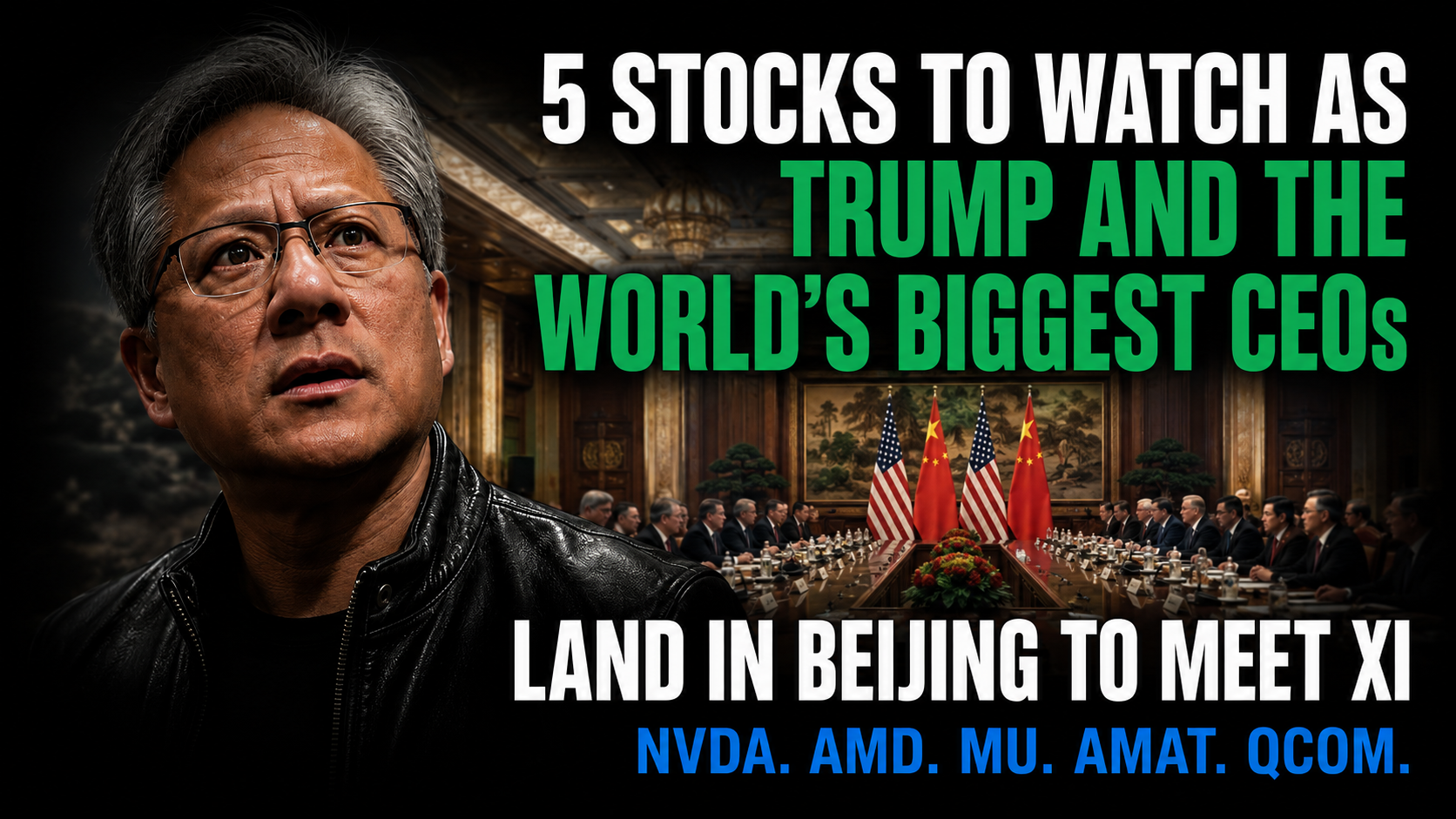
Trump arrived in Beijing for a two-day summit with Xi Jinping, set against the backdrop of the ongoing U.S.-Iran conflict and a fragile truce between the world’s two largest economies. The U.S. delegation includes Nvidia’s Jensen Huang, Apple’s Tim Cook, and Elon Musk, turning a diplomatic trip into a CEO-level tech summit. Chip export licenses, tariff structure, and AI hardware access are all on the agenda.
Key Takeaways
- Analysts have issued 15+ fresh price target upgrades on AMD (some reaching $530), a $1,000 bull case on Micron, and initiated AMAT at Buy with a $517 target, with NVDA sitting at a $315 analyst target.
- Before the delegation list went public, Micron’s CEO sold $21.5M in stock on May 1, AMD’s CTO offloaded roughly $20M through April, and Qualcomm’s CEO sold $3.7M on May 4-5.
- This is a catalyst week. The post-summit joint statement language around export restrictions and tariff structure will drive intraday moves across the entire semiconductor sector.
Financial Tech Wiz Trading Journal
Track Every Catalyst Trade Before and After the Summit
Log your thesis, entry, and exit on semiconductor plays. When the summit ends and the dust settles, you will know exactly what worked and why.
Start Tracking Your TradesWhat It Means for Traders
The bullish case is easy to read. A productive summit means fewer restrictions on chip exports, more runway for Nvidia’s GPU sales into China, and a broad relief trade across the semiconductor sector. AMD, AMAT, MU, and QCOM all benefit if any meaningful language around trade restrictions appears in the joint statement.
The harder read is the insider activity. Executives at Micron, AMD, and Qualcomm unloaded significant stock in the weeks before the delegation list became public knowledge. Insider sales happen for many reasons: planned 10b5-1 programs, diversification, tax timing. They do not predict outcomes. But the gap between analyst enthusiasm and executive behavior is worth tracking as you size positions heading into any summit-driven catalyst.
The clearest setup here is the post-summit reaction window. If concrete language around export licenses or tariff reductions lands in the joint statement, semiconductors move hard intraday. If the result is vague “productive discussions” language, the optimism already priced in could unwind quickly. Catalyst trades reward the traders who did the pre-work, logged their plan, and set clear exit conditions before the news hit.
Stocks to Watch This Week
NVDA: $315 analyst target with Jensen Huang physically in the room where decisions get made. The market has already priced in summit optimism. The question is whether new export access adds a fresh leg or triggers a sell-the-news reaction.
AMD: 15+ fresh price target upgrades, with some targets reaching $530. AMD’s CTO sold roughly $20M through April. Wall Street is leaning bullish hard into this week.
MU (Micron): $1,000 bull target on the table. CEO sold $21.5M on May 1. Micron’s exposure to China DRAM demand makes the summit directly relevant to their revenue outlook.
AMAT (Applied Materials): Freshly initiated at Buy with a $517 target. Applied Materials supplies the equipment that builds chips, so any relaxation of export restrictions flows directly to their order book.
QCOM: Qualcomm’s CEO sold $3.7M on May 4-5, just before the delegation news. China-based handset makers represent a significant portion of Qualcomm’s revenue, making this summit a direct catalyst for licensing and royalty income.
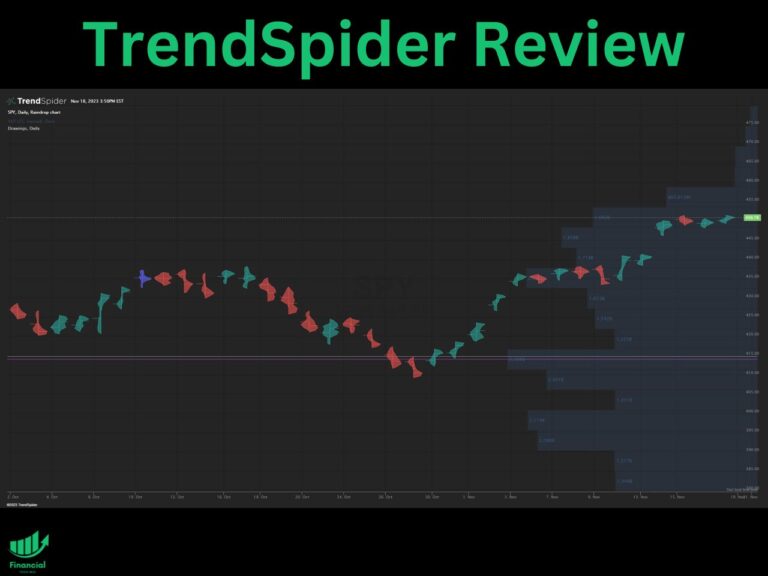
If you want to set alerts and scan for unusual momentum across these names heading into the post-summit reaction, TrendSpider’s stock scanner is worth having set up before Thursday.
Free Tool
Start Logging Your Catalyst Trades for Free
Not ready for the full journal? The free Google Sheets trading journal template gives you a structured place to log your thesis and track results on event-driven plays like this one.
Get the Free TemplateFAQ
What stocks are most affected by the Trump-Beijing summit?
Semiconductor and chip-adjacent names have the most direct exposure: NVDA, AMD, MU, AMAT, and QCOM. All have significant China revenue or supply chain ties that shift meaningfully with any change in export restrictions or tariff structure.
Why are chip stocks moving before the summit ends?
Markets price in expected outcomes ahead of the event. With analysts issuing major price target upgrades and high-profile CEOs in the delegation, traders are betting on a productive result. The risk is that actual outcomes disappoint the optimism already priced in.
What should traders watch for after the summit?
Look for specific language in the joint statement around semiconductor export licenses, tariff schedules, and any named restrictions lifted or added. Vague “productive talks” language with no concrete action typically triggers a sell-the-news reaction on event-driven catalyst trades.
Get Your Free Trading Resources
Grab the free trading journal template plus the same tools we use to stay organized, consistent, and objective.
- Free trading journal template
- Custom indicators, watchlists, and scanners
- Access our free trading community
Enter your email below to get instant access.
No spam. Unsubscribe anytime.