Webull Review 2026: A Trader’s Look at Fees, Tools, and Trade-Offs

Webull built its reputation on a simple pitch: the charting and data that used to require a paid platform, wrapped in a commission-free brokerage. Eight years after its US launch, that pitch mostly still holds, but the gaps matter more as your account grows. This review covers what Webull does well, what it quietly charges for, and who should look elsewhere.
Key Takeaways
- Webull offers commission-free stocks, ETFs, and equity options with charting and screening tools that outclass most free platforms, making it a strong fit for beginner and intermediate active traders.
- The real costs hide in the edges: index option contract fees, margin rates, subscription market data, and payment for order flow instead of premium execution.
- Webull’s built-in account statements will not tell you whether your trading is actually working; serious traders pair it with a dedicated journal that breaks down win rate and P&L by symbol and hold time.
Know Your Numbers on Webull
Financial Tech Wiz Trading Journal
Auto-import your Webull stock, options, and crypto trades, then see your win rate and P&L broken down by symbol and hold duration, plus your full equity curve, without touching a spreadsheet. $19/month or $9.91/month billed annually.
Start Journaling Your Webull TradesWhat Is Webull?
Webull is a US-regulated brokerage that launched stateside in 2018 and became a publicly traded company (Nasdaq: BULL) in April 2025. Webull Financial LLC is a FINRA member and carries SIPC protection up to $500,000 per customer, including $250,000 for cash claims. The platform spans a desktop app, a browser version, and one of the most fully featured mobile trading apps in the free tier.
The quick verdict: Webull is one of the best free platforms for traders who have outgrown Robinhood’s simplicity but are not ready to pay for professional software. You get real charting, real screeners, paper trading, and options with no per-contract commission on equity options. What you give up is depth at the edges: no mutual funds, no OTC stocks, thinner research, and customer service that lives inside an app rather than on a phone line.
Webull Fees and Pricing
Webull’s headline pricing is genuinely free where most traders spend their time. The details below are current as of this writing; always confirm on Webull’s pricing page before opening an account.
| Cost item | What Webull charges |
|---|---|
| US stocks and ETFs | $0 commission |
| Equity options | $0 commission, $0 per contract |
| Index options | Per-contract fee (around $0.55, varies by index) |
| Futures | Per-contract commission plus exchange fees |
| Margin | Tiered rates; highest bracket applies to balances under $25,000 |
| Account minimum | $0 ($2,000 for margin, per FINRA rules) |
| Level 2 market data (Nasdaq TotalView) | Subscription after intro period, or bundled with Webull Premium |
| Webull Premium | Paid annual subscription bundling data and rate perks |
Two cost realities deserve attention. First, Webull is a payment-for-order-flow broker: routing revenue subsidizes zero commissions, and execution quality, while fine for most retail order sizes, is not the priority it is at a broker like Interactive Brokers. Second, regulatory and exchange pass-through fees still apply to options and sell orders, so “free” never means a zero line item on every confirmation. Neither is unusual for the category, but a reviewer who does not mention them is not reading their own trade confirmations.
Webull Premium and market data
Real-time quotes for US stocks are included for everyone, but depth-of-book data is not. Level 2 comes from Nasdaq TotalView and moves to a paid subscription after the introductory period, which surprises traders coming from brokers that bundle it. Webull’s answer is Webull Premium, an annual subscription that packages Level 2 data with preferential rates on margin and idle cash. Whether Premium pays for itself is simple math: if you would subscribe to TotalView anyway, or you carry a margin balance most months, the bundle usually comes out ahead. A buy-and-hold investor who checks the app twice a week can skip it without noticing.
One more line item worth knowing about: interest on uninvested cash. Webull pays a competitive variable rate on idle balances, but the headline rate has at times been gated behind Premium or promotional enrollment. Read the current terms before assuming the advertised yield applies to your account tier.
Platforms and Charting
Charting is the reason traders pick Webull over other free brokerages. All three versions of the platform share the same core toolkit, and it is deep for something that costs nothing.
Desktop and web
Webull Desktop is where the platform earns its keep: multi-chart layouts, dozens of technical indicators, custom intervals, drawing tools that persist across sessions, and a watchlist-screener-chart workflow that feels closer to paid software than to an app-first broker. The built-in screener filters on technical and fundamental criteria and feeds results straight into your watchlists. It is not a TradingView replacement if you live in Pine Script or need cross-broker charting, but for most swing traders the desktop charts are more than enough.
Mobile app
The mobile app carries nearly all of the desktop’s functionality, which is rare. Full indicator sets, multi-timeframe charts, options chains, alerts, and paper trading all work from a phone. If mobile-first trading matters to you, Webull consistently lands near the top of our best mobile trading apps rankings for exactly this reason. The trade-off is density: the interface throws a lot of numbers at a small screen, and beginners can find it noisy compared to stripped-down apps.
Alerts round out the toolkit on every platform version: price alerts, percentage-move alerts, and indicator-condition alerts all sync between desktop and mobile, so a setup you flag at your desk pings your phone when it triggers. Combined with the paper trading account, that alert flow makes Webull a legitimately good environment for practicing a rules-based process: build the watchlist, set the alert at your level, and act only when it fires instead of staring at the chart.
Options Trading on Webull
Equity options carry no commission and no per-contract fee, which makes Webull one of the cheapest venues for single-leg and defined-risk spread trading. The options chain is clean, supports multi-leg strategies with visual payoff diagrams, and surfaces implied volatility and the Greeks without extra subscriptions. Index options (SPX, XSP, and similar) do carry per-contract fees, so high-frequency index spread traders should price that against a dedicated options broker like tastytrade; our Webull vs tastytrade comparison covers that decision in detail.
Approval tiers work like most brokers: lower tiers cover covered calls and cash-secured puts, higher tiers unlock spreads and uncovered strategies. Assignment and exercise are handled in-app. For learning the mechanics before risking money, the paper trading environment includes options, which very few free platforms offer.
Futures and Crypto
Webull added futures trading to the same account interface, with per-contract commissions that undercut legacy futures brokers, though specialist platforms still win on tooling; if futures are your main market, weigh Webull against a dedicated venue like Tradovate using our Tradovate vs Webull breakdown. Crypto for US customers runs through Webull Pay, a separate but linked app, rather than inside the main brokerage account. Availability of specific coins and the exact custody arrangement have shifted over the years, so check the current lineup before funding an account for crypto specifically.
Paper Trading, Research, and Account Types
Webull’s paper trading is free, unlimited, and includes both stocks and options, making it one of the better sandboxes for testing a strategy before committing capital. Research is serviceable rather than deep: consensus analyst ratings, basic fundamentals, earnings calendars, and community sentiment, but nothing approaching the third-party research libraries at full-service brokers. Account types cover individual taxable accounts plus traditional, Roth, and rollover IRAs. There are no mutual funds anywhere on the platform and no OTC or pink-sheet stocks, which rules Webull out as an only-broker for some investors.
Opening a Webull Account
Account opening is fully digital and usually clears the same day. You will need the standard broker paperwork inputs: Social Security number, employment details, and the regulatory questions every US brokerage asks about trading experience and income. Choose between a cash account and a margin account at signup; you can change later, but the choice matters for day traders because of the pattern day trader rule covered below. Funding options include ACH transfers (free, and instant buying power is typically extended on a portion of the deposit while the transfer settles) and wire transfers for larger amounts.
Webull runs new-account promotions more or less continuously, usually fractional shares or deposit bonuses that scale with the amount you fund. The offers rotate too often to quote here; check the current promotion before funding, and treat any bonus as a nice-to-have rather than a reason to pick a broker. A free stock worth a few dollars should not decide where your capital lives.
Customer Service and Support
Support is the category where Webull’s free-platform economics show. Help lives primarily in-app: a help center, email tickets, and chat, with phone support available but not the always-on, branch-backed experience you get from Schwab or Fidelity. For routine questions the in-app path works fine. Where it stings is the urgent edge case: a stuck order during a volatile open, a transfer that did not land, an options assignment question at the worst possible moment. Third-party review sites reflect this split, with platform praise on one side and service complaints on the other. If white-glove support is a requirement, that alone is a reason to hold your long-term money at a full-service broker and use Webull for active trading.
Who Webull Is For (and Who Should Skip It)
Webull fits beginner-to-intermediate active traders who want real charts without a software bill: swing traders working technical setups, options traders running defined-risk strategies on equities, and mobile-first traders who refuse to be chained to a desk. It also suits Robinhood graduates who want Level 2 depth, better screeners, and paper trading.
Skip Webull if you need mutual funds or OTC access, if you want phone-first customer support with a human on the line quickly, or if you are a professional-volume trader for whom execution quality and API access outweigh zero commissions. Day traders should also plan around the pattern day trader rule: like every US margin broker, Webull limits margin accounts under $25,000 to three day trades per five rolling sessions. A cash account sidesteps the PDT flag at the cost of waiting on settlement, which we cover in the FAQ.
How Webull Compares to Other Platforms
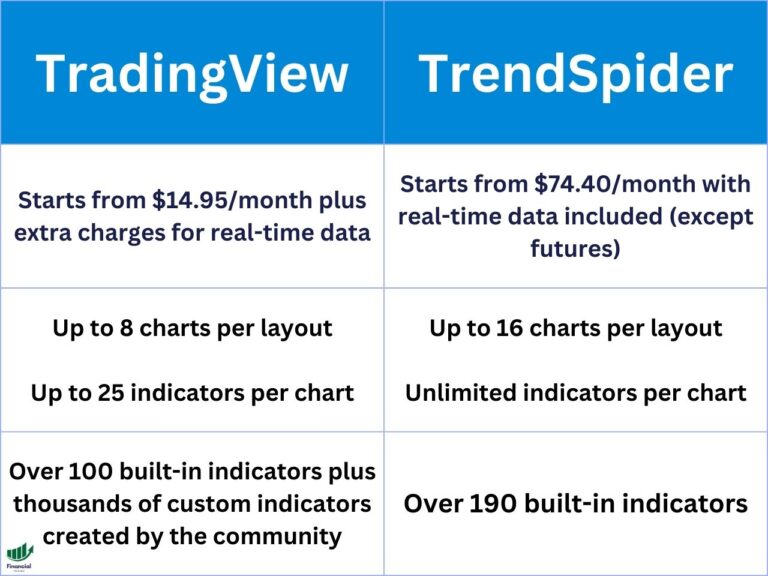
A review only gets you so far; most traders are really choosing between two or three finalists. We keep dedicated head-to-heads for the most common matchups: Webull vs thinkorswim for traders weighing Schwab’s professional-grade platform against Webull’s lighter footprint, TradingView vs Webull for charting-first traders (linked above), Webull vs tastytrade for options specialists, and Tradovate vs Webull for futures. For the full landscape ranked by trading style, start with our guide to the best trading platforms.
The short version: thinkorswim beats Webull on analytical depth and support but demands more learning curve; TradingView beats it on charting and community scripts but is not itself a broker for US stocks; tastytrade beats it for high-volume index options; Webull beats all three on the combination of free, mobile, and good-enough charts.
How to Track Whether You Actually Make Money on Webull
Here is the question the app itself never answers well: is your trading working? Webull shows account value and per-position P&L, but it will not tell you your win rate on breakout setups versus earnings plays, whether your Tuesday entries outperform your Friday ones, or how much of your edge evaporates when you hold through weekends. Statements are records, not analytics.
That is the gap a dedicated journal closes. The Webull trading journal setup takes a few minutes: connect Webull through SnapTrade inside the Financial Tech Wiz Trading Journal, pick your date range, and your stock, options, and crypto history imports automatically. From there you get win rate and P&L across your positions broken down by symbol and hold duration, an equity curve, AI-generated insights, and a place to log the reasoning behind each trade. The journal supports auto-import from 25+ brokers, so it travels with you if you ever leave Webull.
Not ready for a paid tool? Start with our free trading journal template for Google Sheets and upgrade when manual logging starts costing you more time than it is worth.
Get Your Free Trading Resources
Grab the free trading journal template plus the same tools we use to stay organized, consistent, and objective.
- Free trading journal template
- Custom indicators, watchlists, and scanners
- Access our free trading community
Enter your email below to get instant access.
No spam. Unsubscribe anytime.
Webull Pros and Cons
Pros: commission-free stocks, ETFs, and equity options; best-in-class free charting and screeners; a mobile app with near-desktop functionality; free paper trading that includes options; futures and IRA availability under one roof; low barrier to entry with no account minimum.
Cons: no mutual funds or OTC stocks; index option and futures contract fees; payment for order flow instead of premium execution; app-based customer support; research depth well behind full-service brokers; crypto routed through a separate app; built-in performance analytics too shallow for serious review of your own trading.
Final Verdict: Is Webull Worth It in 2026?
Yes, for the trader it was built for. Webull remains the strongest free package of charts, screeners, options tools, and paper trading available to US retail traders, and the mobile app is arguably the best in the free tier. Treat the subscription data, index option fees, and margin rates as the real price tag, go in knowing support is app-first, and measure your results in a proper journal rather than trusting the account graph. Traders who do those three things get a lot of platform for zero dollars.
FAQ
Is Webull good for beginners?
Yes, with a caveat. The zero commissions, $0 minimum, and unlimited paper trading make it a low-risk place to learn, but the interface is denser than beginner-first apps. If you are willing to spend a weekend learning the layout, you will not outgrow Webull as fast as you would a simpler platform.
What is the downside to Webull?
The main downsides are no mutual funds or OTC stocks, app-based customer service, payment for order flow, fees on index options and futures contracts, and market data that costs extra after the introductory period. None are dealbreakers for active equity and options traders, but income investors and OTC traders should look elsewhere.
Is it better to use Webull or Robinhood?
Webull is better for anyone who reads charts: it wins decisively on charting, screening, Level 2 data, and paper trading. Robinhood keeps the edge on interface simplicity and its broader ecosystem of consumer products. Traders who plan to analyze setups rather than just buy and hold generally end up happier on Webull.
What is the 25k rule on Webull?
It is FINRA’s pattern day trader rule, not a Webull policy. If you place four or more day trades within five business days in a margin account holding under $25,000, the account gets flagged and restricted. Workarounds are trading in a cash account (settlement times apply) or keeping day trades to three per rolling five sessions until the account clears $25,000.
Can you actually make money on Webull?
The platform will not stop you; the odds are set by your strategy and discipline. The honest answer is that most traders never find out precisely because they never measure. Import your Webull history into a trading journal, review your win rate and average win versus average loss by setup, and you will know within a few dozen trades whether your approach has an edge.
Does Webull have a built-in trading journal?
No. Webull provides order history, statements, and basic P&L displays, but no setup tagging, no win-rate analytics, and no way to review performance by strategy. Traders who want that pair Webull with a dedicated journal that auto-imports trades, like the Financial Tech Wiz Trading Journal.
Is Webull good in 2026?
Yes, within its lane. The 2026 version of Webull is a more complete brokerage than the app that launched in 2018: futures, IRAs, a Premium tier, and a public listing on the Nasdaq have filled out the offering. The core appeal is unchanged, though. It is still the best free toolkit for chart-driven traders, and still the wrong choice for investors who need mutual funds, OTC access, or hand-holding support.
Is Webull safe?
Webull Financial LLC is a FINRA-regulated broker-dealer and SIPC member, so securities are protected up to $500,000 (including $250,000 cash) if the broker fails. SIPC does not protect against market losses, and crypto held through Webull Pay falls outside SIPC coverage entirely.
Get Your Free Trading Resources
Grab the free trading journal template plus the same tools we use to stay organized, consistent, and objective.
- Free trading journal template
- Custom indicators, watchlists, and scanners
- Access our free trading community
Enter your email below to get instant access.
No spam. Unsubscribe anytime.