Apex Trader Funding vs Topstep 2026: Which Prop Firm Is Right for You?

Both Apex Trader Funding and Topstep made major changes in early 2026, and the article you read six months ago is probably wrong. Apex overhauled its entire product line on March 1, 2026. Topstep locked all new accounts into its proprietary TopstepX platform in 2025 and restructured its payout tiers. If you are choosing between these two firms right now, here is what actually matters.
I have tracked both firms through these changes. This comparison covers the mechanics that determine whether you get funded, whether you stay funded, and whether you actually get paid.
Key Takeaways
- Apex 4.0 (March 2026) replaced monthly subscriptions with one-time evaluation fees and added an EOD drawdown option, making it significantly cheaper for traders who pass quickly.
- Topstep eliminated the consistency rule on Standard funded account payouts, but locked new accounts into the TopstepX platform, which has drawn heavy criticism on Trustpilot (3.4/5 as of mid-2026).
- Neither firm allows overnight trading as of 2026. Both are day-trading-only operations.
If you are still deciding whether either firm belongs on your shortlist, start with our full prop firm comparison, which ranks the wider futures field on drawdown type, consistency rules and payout caps.
TRACK YOUR PROP CHALLENGE
Financial Tech Wiz Trading Journal
Log every futures trade, track your P&L and daily trading results, and spot the consistency issues that trip up prop evaluations before they cost you an account.
Try the Journal FreeWhat Changed in 2026
The article you read in 2024 or early 2025 describes two firms that no longer exist in the same form. Here is a quick orientation before the deeper comparison.
Apex 4.0 (March 1, 2026)
Apex rebuilt its product line from scratch. Monthly subscriptions are gone. You now pay a one-time evaluation fee: full retail is $297 for a 100K EOD account, but Apex runs near-constant promotions that typically drop that to $25 to $40. The Intraday version is usually around $20 on promo. Pass and you pay a one-time activation fee ($99 EOD, $79 Intraday). After that, you owe Apex nothing until you need a new evaluation.
The other major addition in Apex 4.0 is end-of-day (EOD) trailing drawdown. Before March 2026, Apex used intraday trailing drawdown only, which was its most common complaint. The new EOD option recalculates your drawdown floor once per day at market close. Intraday equity swings do not move it. The Intraday option still exists for scalpers who want no daily loss limit, but for most traders, EOD is the better choice and it typically costs about $10 more on promo.
Apex also introduced a 6-payout cap per Performance Account. After six payouts, the account closes and you start a new evaluation. The upside: Apex allows up to 20 funded accounts simultaneously, so the overall earning potential across accounts is large. The trade-off: this is no longer a “get funded, trade forever” model.
Topstep’s 2025 to 2026 Changes
Topstep’s most controversial change was locking all new Trading Combines and Express Funded Accounts into TopstepX, their proprietary platform, starting in 2025. If you have legacy funded accounts on NinjaTrader or Tradovate, those continue. All new accounts are TopstepX-only. Traders who spent years building workflows around NinjaTrader or Sierra Chart have pushed back hard. Topstep’s Trustpilot rating dropped from 4.5 to 3.4 as a direct result of the platform transition.
Topstep also restructured its funded account tiers into two paths: a Standard Express Funded Account (Standard XFA) with no consistency rule on payouts, and a Consistency XFA with a 40% consistency rule but a lower winning-day threshold. The Standard XFA is the cleaner path for most traders.
Side-by-Side Comparison
| Feature | Apex Trader Funding | Topstep |
|---|---|---|
| Founded | 2021, Austin TX | 2012, Chicago IL |
| Pricing model | One-time fee | Monthly subscription |
| 100K eval cost (promo) | ~$30 EOD / ~$20 Intraday | $99/mo + $149 activation |
| Drawdown type | EOD or Intraday (you choose) | EOD only |
| Eval consistency rule | None | 50% best-day cap |
| Time limit | 30 calendar days | Unlimited |
| Pass in one day? | Yes | Technically 2+ days (consistency) |
| Funded consistency rule | 50% on PA payouts | None (Standard XFA) |
| Profit split | 100% first $25K, then 90/10 | 90/10 from day one (Standard XFA) |
| Max funded accounts | 20 | 5 XFA (1 Live) |
| Payout cap per account | 6 payouts, then account closes | No per-account cap |
| Platforms | Rithmic, Tradovate, WealthCharts | TopstepX only (new accounts) |
| Overnight trading | No | No |
| Payout method | Deel | Wise |
| Trustpilot (mid-2026) | 4.4/5 (18K+ reviews) | 3.4/5 (13K+ reviews) |
Pricing Deep Dive
This is the sharpest difference between the two firms in 2026.
Apex charges once. The full retail price for a 100K EOD account is $297, plus a $99 activation fee when you pass. On promo pricing, which Apex runs almost continuously, that same account typically costs $25 to $40 for the eval and $99 to activate. If you pass on your first attempt, your total cost for a funded 100K account is roughly $125 to $140 all-in. If you fail and buy a new eval at promo pricing, you are spending another $25 to $40.
Topstep charges monthly. The Standard Path for a 100K account is $99 per month plus a one-time $149 activation fee when you pass. There is no time limit on the evaluation, so if you take three months to pass, you have spent $446 before your activation fee. Topstep also offers a No Activation Fee path at $159 per month with no additional charge on passing, which is better value for traders who expect to take more than one month.
For experienced traders who pass evaluations quickly, Apex is dramatically cheaper. For traders who need time to develop their approach, Topstep’s unlimited duration changes the calculus. A slow-moving evaluation at $99 per month is less financially damaging than repeatedly buying new Apex evaluations that expire in 30 days.
Drawdown Mechanics
Both firms use trailing drawdown that moves up with your equity peak and never comes back down. The key difference is when the trailing drawdown recalculates.
EOD trailing drawdown (both firms’ primary product): your drawdown floor updates once per day at market close. If you run your account up $2,000 intraday before giving back $1,800 and closing flat, your drawdown floor does not move. Only your end-of-day closing equity matters. This is the mechanic most futures prop traders prefer because it lets you absorb intraday volatility without permanently damaging your drawdown floor.
Apex also offers Intraday trailing drawdown on its second account type. Here, the floor updates in real time. If your position spikes up $500 before reversing, your floor moved up $500 and it is not coming back. This is the Apex drawdown model from before March 2026 that generated most of the complaints. Apex kept it as an option because some scalpers prefer no daily loss limit, which the Intraday account offers. For most traders, the EOD version is the better choice.
On a 100K account, both firms set the trailing drawdown at $3,000 and the profit target at $6,000. The profit-to-drawdown ratio is functionally identical at the primary product level.
Payout Rules
Passing the evaluation is one challenge. Getting paid consistently is another.
Apex: You need 5 qualifying trading days (a qualifying day on a 100K account means $250 or more in net profit). Once you have 5, you can request a payout. Apex uses a 6-payout ladder: each successive payout from the same account can be larger than the last. After the sixth payout, the Performance Account closes. The first $25,000 earned across accounts is yours at 100 percent; earnings above that split 90/10 in your favor.
Apex also enforces a 50% consistency rule on payouts: no single trading day can account for 50 percent or more of your total profit since your last payout. This does not apply during the evaluation phase, only on funded accounts.
Topstep Standard XFA: You need 5 winning days of $150 or more. No consistency rule applies to payouts. You do not need to track best-day percentages or spread your profits across multiple sessions to unlock a withdrawal. Payouts cap at 50 percent of your account balance, up to $5,000 per request ($6,000 on the Consistency XFA path). Topstep’s 90/10 split applies from the first dollar on the Standard XFA. The path to Topstep’s Live Funded Account (real institutional capital up to $150,000) runs through consistent performance on funded accounts.
Payout speed: Apex processes through Deel, Topstep through Wise. Both firms typically settle in 3 to 7 business days.
Platform and Trading Experience
Platform flexibility is where these firms diverge most sharply, and it matters more than most comparison articles acknowledge.
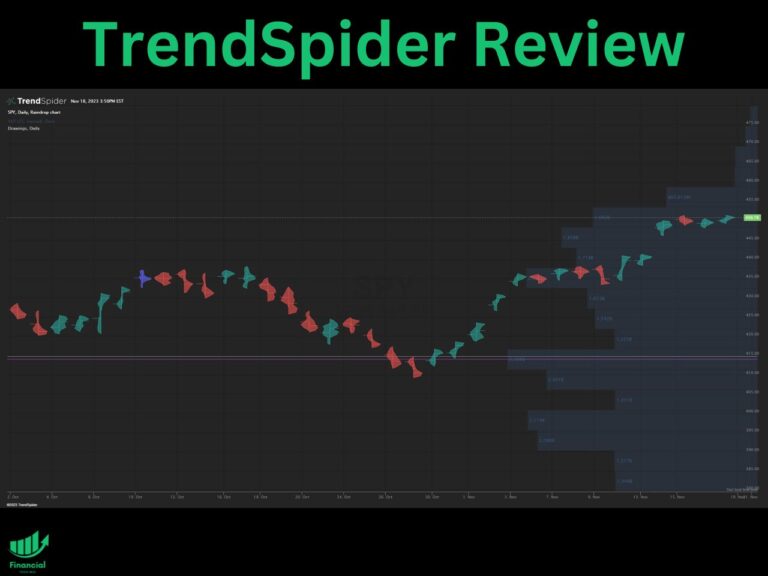
Apex supports three data feed options: Rithmic, Tradovate, and WealthCharts. Rithmic connects to NinjaTrader, MotiveWave, Sierra Chart, Quantower, and other third-party platforms. Tradovate connects to TradingView. WealthCharts is its own web-based charting platform. In practice, Apex traders can use nearly any major futures trading platform. NinjaTrader is included free with Rithmic and Tradovate evaluation accounts.
Topstep now requires all new accounts to use TopstepX, their proprietary web platform. Legacy accounts on NinjaTrader or Tradovate continue to operate, but new traders have no choice. TopstepX is built on TradingView charts with integrated order flow tools and a community sentiment indicator. The interface is functional, but the forced migration from third-party platforms has been deeply unpopular. Topstep’s Trustpilot rating fell from 4.5 to 3.4 in the 12 months following the TopstepX rollout, driven largely by platform complaints.
If you have a platform preference built around NinjaTrader, Sierra Chart, or a custom indicator setup, Apex gives you that flexibility. If you are starting fresh and have no platform loyalty, TopstepX is adequate, and Topstep has indicated they are actively improving it.
One note: both firms require all positions to be closed before the end of the trading session. Neither firm allows overnight holds as of 2026. If your strategy involves holding positions through the overnight session, neither firm will work for you.
FOR PROP CHALLENGE TRADERS
Track Your Prop Evaluation Progress
The Financial Tech Wiz Trading Journal lets you log each trade, monitor your running P&L and daily trading results, and review the consistency patterns that determine whether you hit the payout threshold, or need to reset.
Start Tracking FreeWho Each Firm is Best For
Choose Apex Trader Funding if you:
- Have a proven strategy and pass evaluations quickly. On promo pricing, Apex’s one-time fee structure is the lowest entry cost in the industry.
- Want platform flexibility. Apex supports NinjaTrader, Sierra Chart, TradingView (via Tradovate), and others through Rithmic and Tradovate data feeds.
- Want to run multiple funded accounts simultaneously. Apex allows up to 20 active Performance Accounts, which gives you far more aggregate earning potential than Topstep’s 5-account cap.
- Prefer no consistency requirement during the evaluation phase. You can pass an Apex evaluation in a single session if you manage your drawdown.
Choose Topstep if you:
- Are newer to prop trading and want structured education, community support, and unlimited evaluation time to develop your approach.
- Want a path to real institutional capital. Topstep’s Live Funded Account progression, where you eventually trade real capital up to $150,000, is one of the only institutional-level progression paths in the prop firm space.
- Do not want a consistency rule on funded account payouts. The Standard XFA has no consistency requirement: 5 profitable days of $150 or more and that is it.
- Are comfortable with TopstepX or do not have strong platform preferences from prior trading experience.
Bottom Line
For most experienced futures traders in 2026, Apex Trader Funding offers the better economics: lower cost, more account flexibility, EOD drawdown now standard, and no platform lock-in. The 6-payout-per-account cap is a real trade-off, but the ability to run 20 accounts simultaneously and the one-time fee model offset it for traders who pass evaluations consistently.
Topstep makes more sense for traders who are still developing their edge. The unlimited evaluation period, structured education, and Standard XFA’s no-consistency-rule payout path are genuine advantages for patient traders. Topstep’s TopstepX platform issues are a real concern right now, but the firm has a longer track record and the educational infrastructure is worth something if you are earlier in your career.
For more on how each firm fits into a broader prop trading strategy, see my full Apex Trader Funding review and the best futures prop firms comparison that ranks all the major players side by side.
FAQ
What is Apex 4.0?
Apex 4.0 is the March 1, 2026 overhaul of Apex Trader Funding’s product line. The major changes: monthly subscriptions replaced with one-time evaluation fees, a new EOD trailing drawdown option added alongside the existing Intraday product, a 6-payout-per-account cap introduced on Performance Accounts, the 30-day evaluation window kept, and up to 20 funded accounts allowed simultaneously. Pricing dropped significantly: a 100K EOD account at full retail is $297, and on promo it typically costs $25 to $40.
Does Apex actually pay out?
Yes. Apex reports paying out over $721 million in total payouts since launching in 2021. Payout requests process through Deel and typically settle in 3 to 7 business days. To qualify, you need 5 qualifying trading days (days with $250 or more net profit on a 100K account) and your account must stay above the safety net (drawdown floor plus $100). The 50% consistency rule also applies: no single day can be 50% or more of your total profit since your last payout.
What is the 30% rule in Apex?
The 30% rule referenced in older Apex guides no longer applies. Apex updated its consistency requirements with the 4.0 overhaul. The current rule on funded Performance Accounts is a 50% consistency rule: no single trading day can account for 50 percent or more of your total profit since your last payout. There is no consistency rule during the evaluation phase itself.
Can you hold trades overnight at Apex or Topstep?
No. Both Apex and Topstep require all positions to be closed before the end of the trading session. Apex auto-closes positions at the 4:59 PM ET session break. Topstep requires positions closed before session end on TopstepX. Neither firm supports swing trading or overnight holds as of 2026. If overnight or multi-day holds are part of your strategy, you will need to look at other prop firm options.
Is Topstep good for beginners?
Topstep has historically been the better choice for newer futures traders. The unlimited evaluation time removes deadline pressure, and Topstep invests more in education: TopstepTV, community tools, and structured performance reviews are available to all accounts. The main caveat for 2026 is the TopstepX platform transition. If you are starting fresh with no platform preference, TopstepX is functional. If you have built a workflow around NinjaTrader or other third-party platforms, the forced migration is a real friction point. Topstep is actively improving TopstepX, so the platform situation should improve over time.
Does Topstep have a consistency rule on funded accounts?
On the Standard Express Funded Account (Standard XFA), no. There is no consistency rule. You need 5 winning days of $150 or more and positive P&L since your last payout. The Consistency XFA path applies a 40% consistency rule (no single day can be 40% or more of total profits) but only requires 3 days instead of 5. For traders who want the cleanest funded account experience, the Standard XFA path is the better option.
Financial Tech Wiz / Free resources
Build a clearer picture of your trading.
Start with the free trading journal template. Keep your trades organized, review your results, and build a consistent review routine.
- Free Google Sheets and Excel trading journal template
- Indicators, watchlists, and scanners
- Access to the free trading community
Ready for automatic trade tracking? Explore the Financial Tech Wiz Trading Journal.
Free resources + trading emails. Unsubscribe anytime.