IBM Stock Plunges More Than 23% After Preliminary Q2 Earnings Miss

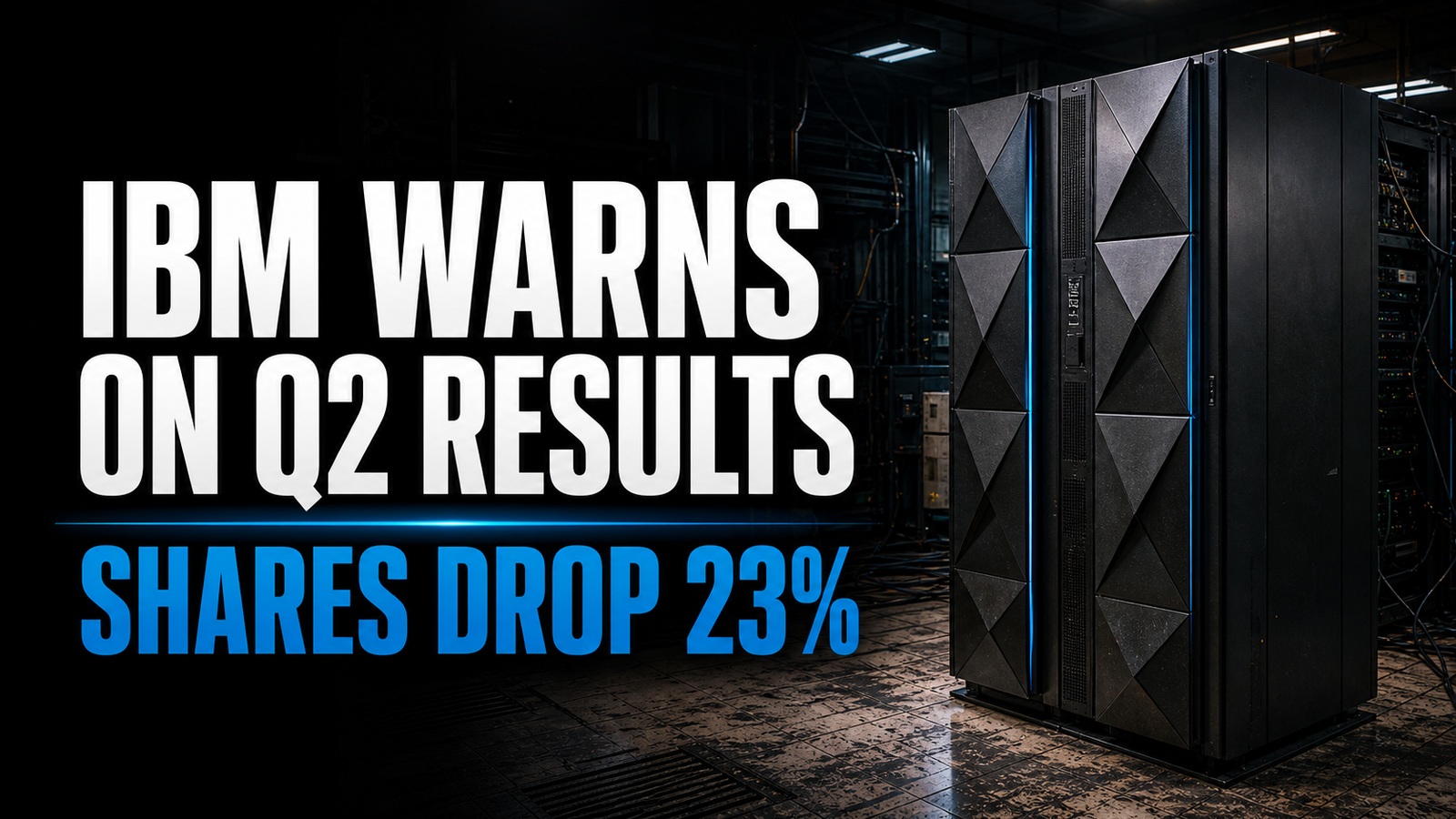
IBM shares fell more than 23% on Tuesday after the company released preliminary second-quarter results that missed Wall Street expectations. The size of the selloff was striking, but the reason behind the miss matters just as much as the headline numbers.
IBM said clients shifted late-quarter technology budgets toward servers, storage, and memory as they tried to secure supply before expected price increases. That reprioritization left less spending for parts of IBM’s software and infrastructure businesses, turning a modest earnings miss into a major reset for the stock.
Key Takeaways
- IBM reported preliminary revenue of $17.2 billion and adjusted earnings of $2.93 per share, below FactSet estimates of $17.86 billion and $3.01.
- Management blamed a late-quarter shift in client spending toward servers, storage, and memory, along with cybersecurity pressure and delayed large deals.
- IBM’s full second-quarter report on July 22 is the next major catalyst, especially for guidance, software demand, and the timing of delayed deals.
Track the setup, not just the headline
Financial Tech Wiz Trading Journal
Record your entry, risk, thesis, and post-earnings follow-through in one place, then compare the result with the rest of your trading history.
Explore the trading journalWhat Happened
IBM’s preliminary report showed second-quarter revenue of $17.2 billion, up 1% from a year earlier, and adjusted earnings of $2.93 per share, up 5%. Those growth rates sound respectable in isolation. The problem was that both figures landed below the market’s expectations.
Analysts surveyed by FactSet expected $17.86 billion in revenue and adjusted earnings of $3.01 per share, according to the Associated Press. That works out to a revenue shortfall of roughly $660 million and an earnings miss of eight cents per share.
The segment mix raised a bigger concern
The preliminary segment figures help explain why investors reacted so sharply. IBM said software revenue grew 5%, consulting revenue was flat, and infrastructure revenue fell 7%. Operating gross margin declined 70 basis points to 59.4%.
In his letter to IBM investors, CEO Arvind Krishna said some clients moved their quarterly capital spending toward supply-constrained infrastructure. He also pointed to cybersecurity concerns and large deals that did not close on the expected timeline.
That explanation suggests the issue was not simply weaker technology demand across the board. Customers were still spending, but the timing and mix of that spending moved away from areas the market expected to support IBM’s quarter.
Why It Matters
An eight-cent earnings miss normally would not explain a one-day decline of more than 23% by itself. The market appears to be questioning whether IBM’s business mix can absorb a sudden change in enterprise technology budgets without creating a larger hit to margins and growth.
Software is especially important because investors generally value recurring, higher-margin revenue differently from hardware sales. If customers are temporarily prioritizing memory, servers, and storage, IBM may recover some delayed software and consulting activity later. If the shift lasts longer, estimates for future quarters could need further adjustment.
The move also shows why an earnings setup needs a defined loss limit before the announcement. A large overnight gap can skip past a normal stop level. Before taking similar event risk, I like to map the maximum acceptable loss with a risk and reward calculator and size the position around the gap risk, not just the chart pattern.
What Traders Should Watch Next
IBM’s full July 22 report
IBM is scheduled to release its complete second-quarter results on July 22. Traders should listen for any change to the full-year outlook, more detail on gross margins, and a clearer estimate of how much business was delayed rather than lost.
The conference call also needs to clarify whether the late-June capex shift was a short-lived purchasing decision or the beginning of a broader change in enterprise spending priorities.
Software demand and large-deal timing
The most constructive follow-through would be evidence that delayed software and consulting deals are closing in the current quarter. Continued infrastructure weakness, another margin decline, or vague commentary about deal timing would make it harder to treat the selloff as a one-quarter disruption.
How the stock handles the gap
After a move this large, the first bounce can be volatile and unreliable. I would watch whether IBM can build a base above the initial selloff low, reclaim meaningful resistance, and hold that progress through the full earnings report. A quick bounce that fades before July 22 would signal that investors still want more evidence.
Whatever the setup does next, document the thesis before entering and compare it with the outcome afterward. The free trading journal template is an accessible place to start, while the complete journal guide explains the deeper analytics available when you need more structure.
Sources
- CNBC: IBM shares slide after preliminary second-quarter results miss expectations
- IBM: Arvind Krishna’s letter to investors
- Associated Press: IBM shares plunge after preliminary earnings miss
Get Your Free Trading Resources
Grab the free trading journal template plus the same tools we use to stay organized, consistent, and objective.
- Free trading journal template
- Custom indicators, watchlists, and scanners
- Access our free trading community
Enter your email below to get instant access.
No spam. Unsubscribe anytime.