Episodic Pivot: How to Trade the Market’s Most Explosive Momentum Setup

An episodic pivot is one of the loudest signals a stock chart can give you: a sleepy, ignored ticker suddenly gaps hard on volume nobody was watching for. The setup was named and popularized by trader Pradeep Bonde and later became a core part of Kristjan Qullamaggie’s swing-trading playbook. Here is what an episodic pivot actually is, how to screen for one, and how to trade it with a defined entry, stop, and exit plan.
Key Takeaways
- An episodic pivot (EP) is a stock that gaps sharply, usually 10 percent or more, on a genuine fundamental catalyst and volume well above its normal average, forcing the market to re-rate the business overnight.
- The setup has two entry windows: the initial gap day itself, and the first tight pullback or base that forms days to weeks later, which is typically the lower-risk entry.
- An EP is not a single-day trade idea. The strongest ones become the starting point for a multi-week or multi-month uptrend, which is why screening quality and stop discipline matter more than catching the exact open.
Recommended Tool
Financial Tech Wiz Trading Journal
Log every episodic pivot you take: the catalyst, the gap size, the relative volume, and the entry you used. Tag those trades in the Trades tab, then search your tagged EP records later to review the setup details and outcomes you logged. Starting at $9.91/month billed annually.
See the JournalWhat Is an Episodic Pivot?
An episodic pivot, almost always shortened to EP, is a stock that jumps sharply in price, on volume many times its normal average, because of a fundamental catalyst that changes how the market values the company. Trader Pradeep Bonde coined and taught the term, and it later became one of the signature setups in Kristjan Qullamaggie’s swing-trading approach, which is why you will see it referenced heavily across momentum trading communities.
The word “episodic” is doing real work in the name. This is not a routine earnings beat that nudges a well-covered large cap up two or three percent. An EP typically happens to a stock that was quiet, under-followed, or written off, and the catalyst is surprising enough that the market has to completely reconsider its future. That combination of surprise plus neglect is what tends to produce the outsized, multi-day-to-multi-month follow-through that makes the setup worth studying in the first place.
The Three Ingredients That Make an EP
Not every gap is an episodic pivot. Traders who work this setup generally require all three of the following before they will even flag a chart as an EP candidate.
- A genuine catalyst. Earnings that beat and raise guidance, an FDA approval, a major contract win, a buyout offer, or a turnaround announcement. Routine news, analyst chatter, or a headline with no real substance behind it does not qualify.
- A large price move. Most traders look for a gap of roughly 10 percent or more, though the exact threshold shifts with the stock’s typical volatility. A thinly traded biotech might need a much bigger gap to matter than a liquid mid-cap.
- Volume far above average. The move needs to be backed by real participation, often several multiples of the stock’s average daily volume in the first hour alone. Volume is what separates a real re-rating from a low-liquidity headline spike that fades by lunch.
When all three line up on a stock that was previously flat, range-bound, or simply ignored, you have the raw material for an episodic pivot.
Why Episodic Pivots Tend to Keep Working
The logic behind the setup is fairly simple once you see it. A stock that nobody is watching gets almost no analyst coverage, thin institutional ownership, and low trading volume, which means its price reflects old information and old expectations. When a real catalyst hits, the market cannot instantly absorb the new information in a single session, because institutions that want a meaningful position cannot build one all at once without moving the price further against themselves. That mismatch between how fast the news arrives and how slowly a full position can be built is what tends to stretch the re-rating out over multiple weeks rather than compressing it into a single gap day. It is also why volume, not just price, is the ingredient that confirms a real EP: heavy volume on the gap is early evidence that larger participants are already involved, not just a headline attracting a burst of retail attention that fades by the close.
The Different Types of Episodic Pivots
Not every EP looks the same on the tape. Traders in this space generally group them into a few recurring flavors, and knowing which one you are looking at changes how you approach the entry.
The fresh gap EP
This is the textbook version: the catalyst hits overnight or premarket, the stock gaps immediately, and the move happens on day one in full view. It is the highest-visibility version of the setup and also the one with the most competition for the initial fill, since everyone screening for EPs sees the same gap at the same time.
The delayed reaction EP
Sometimes the market is slow to price in a catalyst. The news comes out, the stock moves a little, and then a day or two later the real move arrives once more participants notice the story. Delayed reaction EPs can actually offer a cleaner, less crowded entry than a fresh gap, because the initial chase has already died down by the time the real move gets going.
The high-volume accumulation EP
Occasionally a stock prints an extraordinary volume day, sometimes millions of shares beyond anything in its recent history, without an equally extraordinary price move to match. Traders read this as institutions quietly building a position ahead of a story that has not fully played out yet. It is a lower-conviction, more speculative read on the setup, and it deserves smaller size and a tighter leash than a confirmed catalyst-driven gap.
The story-based EP
Some EPs are less about one headline and more about a company entering a genuinely new chapter: a turnaround, a new product cycle, or a change in management direction. The initial gap is really the market’s first reaction to a broader thesis, and the stock frequently continues to re-rate over subsequent quarters as more of that story is confirmed by later earnings reports.
What a Textbook Episodic Pivot Looks Like on the Chart
Picture a small or mid-cap stock that has spent the last six months drifting sideways in a tight range on unremarkable volume. Nobody is talking about it. Then, before the open, the company reports earnings that beat estimates by a wide margin and raises full-year guidance well above what analysts had modeled. The stock gaps up 25 percent at the open, trades on volume that is already ten times its recent daily average within the first hour, and closes the day near its high with almost no give-back. That single session is the episodic pivot itself.
What happens over the following weeks is where the setup earns its reputation. Instead of immediately reversing, the stock spends the next two to three weeks digesting the move in a tight, shallow range, often no more than 10 to 15 percent from top to bottom, on steadily declining volume. That tight consolidation is the first base, and a break above its high on renewed volume is frequently the highest quality entry in the whole sequence, since it confirms that buyers are still in control well after the initial excitement of the gap has faded.
How to Screen for Episodic Pivot Candidates
Because the setup is defined by specific, measurable conditions, it screens well. A useful starting filter combines four criteria: a gap up of roughly 10 percent or more from the prior close, relative volume that is several multiples of the stock’s average, a minimum average daily volume and price so you are not stuck in an illiquid name, and real news attached to the move rather than an unexplained spike. Most charting platforms let you build and save a scan like this so you are not manually flipping through the day’s gappers list every morning.
Our own guide to the best TradingView indicators covers the relative volume and moving average tools that make it easier to confirm an EP candidate once your scan surfaces one, and our TradingView stock screener guide walks through building a saved gap-and-volume filter from scratch.
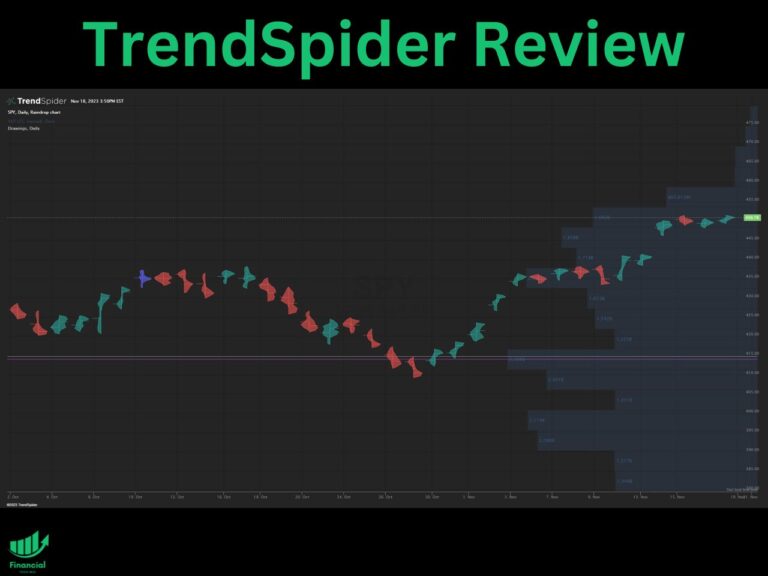
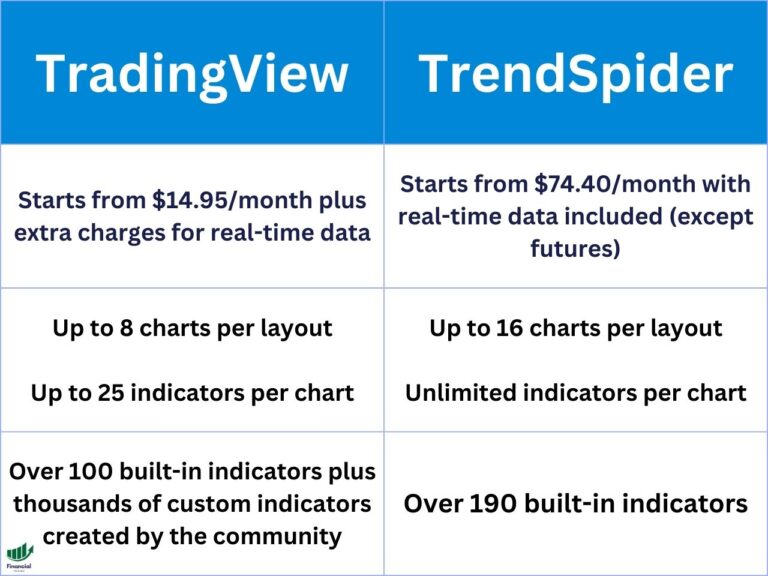
If you want the screening itself automated rather than built by hand, TrendSpider’s scanner can run a gap percentage and relative volume filter continuously throughout the session and alert you the moment a stock qualifies, which matters on a setup where the first hour is often the most important part of the move.
Disclosure: Financial Tech Wiz may earn a commission if you sign up through this TrendSpider link, at no extra cost to you.
Entry Rules for Trading an Episodic Pivot
There are two realistic ways to get into an EP, and they carry very different risk profiles.
Buying strength on the gap day
Some traders buy an opening range breakout: they let the stock establish a high and low in the first five to fifteen minutes, then buy a break above that opening range on continued volume. This gets you into the move early, but you are buying into a stock that has already made a large percentage move for the day, spreads can be wide, and a failed breakout can reverse quickly. This approach demands strict risk control and is not a place for oversized positions.
Waiting for the first pullback or base
The lower-risk entry, and the one favored by most swing traders working this setup, is to let the stock digest the initial move for a few days to a few weeks and buy the first tight consolidation instead of the gap itself. A stock that holds its gains and forms a shallow, orderly base after an EP is showing you that buyers, not just day-one momentum chasers, are willing to defend the new price level. That base also gives you a clean, close reference point for a stop.
Stop Placement and Position Sizing
Episodic pivots are wide-ranging by nature, which makes stop placement and position sizing the two decisions that matter most. On a gap-day entry, a stop below the opening range low or below the day’s VWAP gives you a defined, if sometimes wide, level to work with. On a pullback entry, a stop below the low of the base itself is tighter and easier to justify. Either way, size the position so that a full stop-out costs you a fixed, small percentage of your account, not a fixed number of shares. A stock that gaps 30 percent on an EP day can have a stop distance several times wider than a normal swing setup, and position size needs to shrink to match.
Recommended Tool
Financial Tech Wiz Trading Journal
Position sizing on a wide-range setup like an EP is easy to get wrong in the moment. Record your planned stop and share count with the trade, then search your past EP entries to compare the risk details and outcomes you logged.
See the JournalManaging and Exiting an Episodic Pivot Trade
Once you are in, the job shifts from finding the setup to not giving back the gains it already handed you. A common approach is to trail a moving average, often the 10-day or 20-day on the daily chart, and exit once the stock closes decisively below it. Scaling out into strength, for example taking a partial profit into an especially strong up day, is another way to lock in part of the move while letting a runner ride. Watch for warning signs of exhaustion too: a huge volume spike after an extended run, a wide reversal candle, or a gap up that immediately fails and closes red are all signals that the easy part of the move may be over.
What Happens After the Initial EP Move
The most useful thing to understand about episodic pivots is that the gap itself is rarely the whole trade. Many of the best-performing EPs go on to form a proper base, tightening into something that looks a lot like a volatility contraction pattern, before making their next leg higher. That second-stage base is often the highest quality, lowest risk entry in the entire sequence, because by then the stock has proven the catalyst was real and the initial excitement has had time to cool off. This is also where episodic pivots overlap heavily with the broader momentum and growth-stock approach behind Mark Minervini’s trading strategy, which treats a strong initial move followed by tight basing as the core template for a sustained uptrend.
Common Mistakes When Trading Episodic Pivots
- Chasing an extended gap with no plan. Buying a stock that is already up 40 percent on the day with no defined stop is a bet, not a trade.
- Skipping the volume check. A price move without real volume behind it is far more likely to be a low-liquidity headline spike than a genuine re-rating.
- Sizing the position like a normal swing trade. EPs move further and faster than most setups, and a stop distance that looks small in percentage terms can still be an outsized dollar risk if the position is sized as if it were a quiet stock.
- Ignoring the stop once it is hit. The same volatility that makes EPs attractive on the way up makes them dangerous on the way down. A blown stop can turn a modest planned loss into a large one in a single session.
- Treating every gap as an EP. A routine earnings beat on a well-covered, heavily traded stock is not the same setup as a genuine surprise catalyst on a name the market had stopped paying attention to.
Episodic Pivot vs. a Standard Gap and Go
Every episodic pivot is a gap, but not every gap is an episodic pivot. A standard gap and go trade is a broader, more mechanical category: any stock that gaps on the morning scan qualifies, regardless of why. An EP is a specific, higher-conviction subset of that universe, filtered down to gaps that carry a genuine fundamental catalyst, happen on a previously overlooked stock, and show volume that confirms real institutional participation rather than a brief burst of retail attention. Many gap and go trades are pure intraday plays that are closed by the end of the session. Episodic pivots are frequently the opening chapter of a multi-week or multi-month trend, which is why the pullback and basing entries described above are often more important than the opening print itself.
If you are newer to structured trade tracking in general, our free trading journal template is a simple place to start logging setups like this one before you commit to a paid tool.
| Setup | What triggers it | Typical hold time | Best entry |
|---|---|---|---|
| Episodic Pivot | Surprising fundamental catalyst on a previously overlooked stock, confirmed by outsized volume | Days to several months | The first tight base after the initial gap |
| Standard gap and go | Any morning gap, regardless of the underlying reason | Intraday to a few days | Opening range breakout on the gap day |
| Volatility contraction pattern | A prior uptrend tightening into a shrinking, low-volatility base | Weeks to months | Breakout from the final, tightest contraction |
FAQ
How do I create a stock screener for episodic pivot candidates?
Start with a gap threshold of roughly 10 percent, relative volume several times the stock’s average, and minimum price and average-volume filters to avoid illiquid names. Then confirm the news catalyst yourself: a screener can identify the price and volume conditions, but it cannot decide whether the news meaningfully changes the company’s outlook.
Which stock screener filters help find episodic pivots?
Use filters for percentage change from the prior close, relative volume, share price, and average daily volume. Those conditions can surface candidates during the session. Review the catalyst and the stock’s prior trading activity before treating any result as an episodic pivot.
Can a day-trading stock screener find an episodic pivot?
It can flag a stock that is gapping on unusual volume, which is a useful first step. An episodic pivot also depends on a genuine fundamental catalyst and a stock the market had not been closely following, so review the news and chart before deciding whether a scan result fits the setup.
Get Your Free Trading Resources
Grab the free trading journal template plus the same tools we use to stay organized, consistent, and objective.
- Free trading journal template
- Custom indicators, watchlists, and scanners
- Access our free trading community
Enter your email below to get instant access.
No spam. Unsubscribe anytime.