Best Trading Platforms for 2026: Picks by Trading Style

The “best” trading platform depends entirely on what and how you trade. An options trader, a futures scalper, and someone placing their first stock order need very different tools, and the generic broker roundups rarely make that distinction. This guide breaks down the best trading platforms for 2026 by trading style, then shows you how to measure whether the one you pick is actually making you money.
Key Takeaways
- There is no single best trading platform. The right pick depends on your asset class (stocks, options, futures), your style (active, swing, beginner), and the tools you actually use.
- For most active stock and options traders, thinkorswim (Charles Schwab) and Interactive Brokers lead on depth, while Webull and Robinhood win on simplicity and cost.
- The platform is only half the job. Whatever you trade on, importing your fills into a structured journal is how you turn a stream of trades into a performance edge.
Track every platform in one place
Financial Tech Wiz Trading Journal
Whichever platform you pick below, connect it once and import your trades automatically from 25+ brokers. See your win rate and P&L across your positions, broken down by symbol and hold duration, with AI insights on what is working.
Start tracking your tradesHow we picked these platforms
I trade options and swing setups myself and have spent years inside most of these platforms, so this list is built from a trader’s seat, not a spreadsheet of fees. Three things mattered most. First, execution and order tools: how fast the platform fills, whether it supports the order types active traders actually need, and how well it handles options chains and multi-leg orders. Second, the charting and analysis layer, because a platform you cannot read quickly is a platform that costs you money. Third, the total cost of trading, including commissions, options contract fees, margin rates, and data fees that the headline “$0 commissions” number tends to hide.
Cost is real, but it is not the whole story, and that is where most of the big roundups stop. A platform that saves you a dollar in commission but hides your order flow or buries your performance data is not cheap, it is expensive in the ways that compound. So alongside the platform picks, I weighed how easily you can get your trade history back out, because measuring your results is the part of trading that actually moves your equity curve over time.
Best trading platforms for 2026 at a glance
Here is the short version before we get into who each platform is for. Use this table to narrow the field, then read the use-case sections below for the reasoning.
| Platform | Best for | Stock/ETF commission | Standout strength |
|---|---|---|---|
| thinkorswim (Charles Schwab) | Active stock & options traders | $0 | Pro-grade tools, deep options analysis |
| Interactive Brokers | Advanced & global traders | $0 (Lite) | Order routing, low margin rates, breadth |
| tastytrade | High-volume options traders | $0 | Options-first workflow, capped contract fees |
| TradeStation | Futures & system traders | $0 | Backtesting, automation, futures depth |
| Webull | Cost-conscious active traders | $0 | Strong free charting, clean mobile app |
| Robinhood desktop app | Beginners & simple workflows | $0 | Easiest onboarding, sleek interface |
| E*TRADE | All-around stock & options | $0 | Power E*TRADE platform, balanced |
| Fidelity | Long-term & cost-sensitive | $0 | Execution quality, low overall costs |
Best for active stock and options traders: thinkorswim (Charles Schwab)
For traders who live in their platform all day, thinkorswim remains the one to beat. Now part of Charles Schwab, it carries pro-grade charting, one of the best options chains in the business, and analysis tools (probability cones, custom studies, the thinkBack feature) that let you pressure-test a setup before you risk a dollar. The learning curve is real, but the ceiling is high enough that you will not outgrow it.
The trade-off is weight. thinkorswim is a desktop-first experience, and casual traders will find it heavier than they need. If you are comparing it head to head against alternatives, see our thinkorswim alternatives breakdown and the Schwab vs thinkorswim comparison for how the platforms sit under one roof.
Best for advanced and global traders: Interactive Brokers
Interactive Brokers (IBKR) is what serious, high-volume, and international traders graduate to. It offers the broadest market access of any broker on this list, famously low margin rates, and order-routing that professionals care about. The IBKR Lite tier brings $0 stock and ETF commissions for U.S. traders, while IBKR Pro suits those who want tiered pricing and price improvement.
It is not the friendliest first platform, and the interface rewards traders who take time to configure it. But if your trading has outgrown a simpler broker, IBKR rarely becomes the bottleneck. Read our full Interactive Brokers review for the complete breakdown of fees, platforms, and who it fits.
Best for high-volume options traders: tastytrade
tastytrade was built by options traders for options traders, and it shows in the workflow. Placing, rolling, and managing multi-leg positions is faster here than almost anywhere else, and the commission structure caps contract fees in a way that favors active sellers of premium. If options are the core of what you do, it deserves a serious look. Our tastytrade review goes deeper, and the Webull vs tastytrade and Robinhood vs tastytrade comparisons show how it stacks up against the simpler apps.
Best for futures and system traders: TradeStation
If you trade futures or build mechanical systems, TradeStation earns its spot. Its backtesting and automation tools (built around the EasyLanguage scripting environment) let you define, test, and run strategies in a way the app-first brokers cannot match, and its futures depth is strong. Active equity and options traders are served well too, but the system-trading crowd is where it pulls ahead. See NinjaTrader vs TradeStation and TradeStation vs Tradovate if futures are your focus.
Best for charting and technical analysis: pair your broker with TradingView
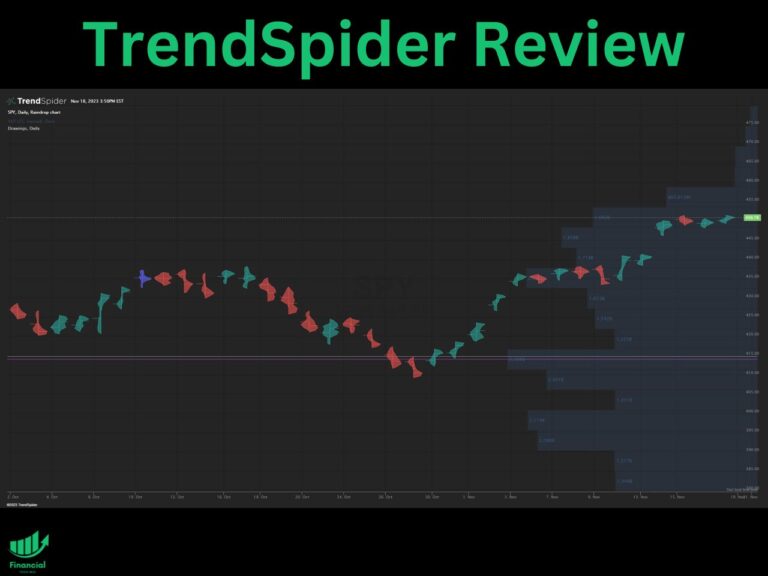
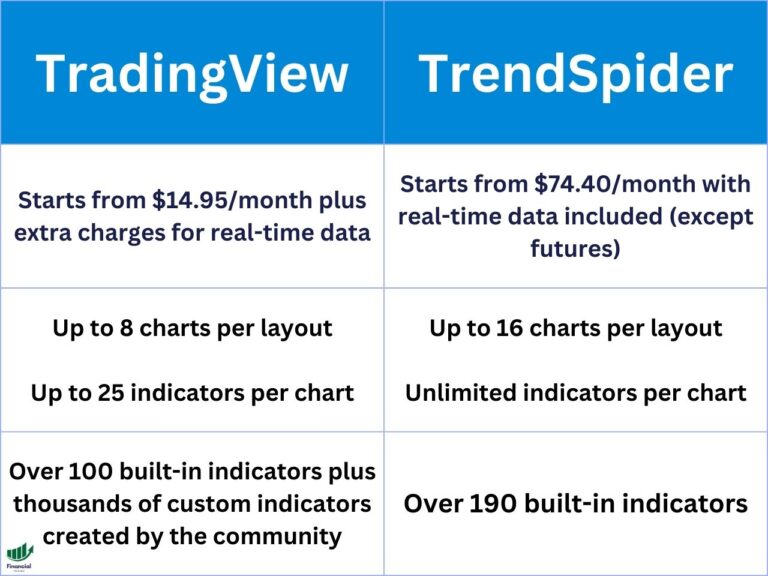
A point worth making clearly: the best charts and the best execution do not always live in the same place. Many active traders run TradingView for analysis and route orders through their broker, and that is a perfectly good setup. TradingView’s charting, alerts, and indicator library are hard to beat, and several brokers now integrate with it directly. For the connection details, see our trading directly on TradingView guide. If charting is your priority, read our TradingView review and best broker for TradingView guide to decide whether to chart and trade in one place or split the two. If your analysis leans on market data and screening rather than drawing tools, our Barchart vs. StockCharts comparison covers that side of the field. For a direct look at TradingView against a scan-first, commentary-heavy alternative, see our TradingView vs. StockCharts comparison.
Best for beginners: Robinhood
For someone placing their first trades, Robinhood is still the easiest on-ramp (see our full Robinhood review). Account opening takes minutes, the interface strips away clutter, and commission-free stock and options trades lower the cost of learning. The same simplicity that makes it great for beginners is what active traders eventually outgrow, since the analysis tools are thin compared with thinkorswim or IBKR. But as a place to learn the mechanics without being overwhelmed, it does its job. If you are weighing it against other simple apps, see Robinhood vs SoFi and Robinhood vs TradingView.
New traders should also start tracking from day one, even on a simple platform. A spreadsheet is enough to begin, and our free trading journal template gives you a structured starting point so good habits form before bad ones do.
Best for cost-conscious active traders: Webull
Webull sits in a useful middle ground. It is more capable than Robinhood, with genuinely strong free charting and a clean desktop and mobile experience, while staying commission-free on stocks and options. For traders who want real analysis tools without the weight (or the learning curve) of a pro platform, it is one of the best values on this list. For the full breakdown of fees, tools, and trade-offs, read our full Webull review.
Best all-around and best for low costs: E*TRADE and Fidelity
Two more deserve a mention for traders who want a balanced, lower-cost home base. E*TRADE’s Power E*TRADE platform is a genuinely good options and active-trading environment that does not get talked about enough, and it pairs well with a broader brokerage relationship. Fidelity, meanwhile, consistently scores well on execution quality and overall cost, which matters more than a flashy interface for many traders. See E*TRADE vs Fidelity and E*TRADE vs Schwab to place them.
Measure what your platform won’t
See which setups actually make you money
Your broker shows you positions. The Financial Tech Wiz Trading Journal shows you patterns: win rate and P&L by symbol and hold duration, an equity curve, and AI insights, with automatic import from 25+ brokers so there is nothing to type in by hand.
Explore the trading journalHow to choose a trading platform
Start with your asset class, because it eliminates most of the field instantly. If you trade futures, you are looking at TradeStation, NinjaTrader, or Tradovate, not Robinhood. If options are your bread and butter, thinkorswim, tastytrade, and IBKR rise to the top. If you are trading stocks and ETFs and want simplicity, the app-first brokers are fair game.
Next, weigh the tools you will actually use against the ones that just sound good. Pro platforms bristle with features, but features you never open are noise. Be honest about whether you need probability analysis and scripting, or whether a clean chart, a fast order ticket, and reliable fills cover your day.
Then look past the $0 headline. Commission-free has become table stakes, so the real cost differences now live in options contract fees, margin rates, data subscriptions, and the quality of your fills. A small edge in execution, repeated across hundreds of trades, dwarfs a few dollars of commission.
Finally, check how easily you can export or sync your trade history. This is the step almost everyone skips, and it is the one that determines whether you can ever review your trading objectively. A platform that locks your data in is quietly working against your improvement.
Why tracking your trades matters more than the platform
Here is the uncomfortable truth after all of this comparison: the platform you choose matters far less than what you do with the trades you place on it. Two traders on the exact same platform can have wildly different results, and the difference is almost never the software. It is whether they review their trades, find their edge, and cut what is not working.
That is why every pick on this list pairs with the same next step. Connect your broker to the Financial Tech Wiz Trading Journal and your fills import automatically from 25+ brokers, so you can see your win rate and P&L across your positions, broken down by symbol and hold duration, watch your equity curve, and get AI insights on your patterns. If you are not ready for the full app yet, start with the free trading journal template and build the habit first. Either way, the platform gets you into the trade; the journal is what turns a year of trades into a real edge.
FAQ
What is the best trading platform for beginners?
For most beginners, Robinhood offers the easiest start: fast account opening, a clean interface, and commission-free stock and options trades that keep the cost of learning low. Webull is a strong step up once you want real charting without much added complexity. Whichever you choose, start tracking your trades from the beginning so you learn from them.
What is the best platform for options trading?
thinkorswim, tastytrade, and Interactive Brokers lead for options. thinkorswim offers the deepest analysis tools, tastytrade is built around a fast options-first workflow with capped contract fees, and IBKR suits high-volume and advanced traders. The right one depends on how often you trade and how much analysis you want before placing a position.
Do I need to pay for a trading platform?
Usually no. Most major platforms, including thinkorswim, Webull, Robinhood, E*TRADE, and Fidelity, offer commission-free stock and ETF trades and free access to the platform itself. Costs that remain include options contract fees, margin interest, and optional premium data subscriptions. Always compare those line items rather than the “$0 commission” headline.
Can I use more than one trading platform at once?
Yes, and many active traders do. A common setup is charting and analysis in TradingView while routing orders through a broker like Interactive Brokers or Schwab. If you trade across multiple platforms or accounts, a journal that imports from all of them gives you one consolidated view of your performance instead of fragmented results.
Get Your Free Trading Resources
Grab the free trading journal template plus the same tools we use to stay organized, consistent, and objective.
- Free trading journal template
- Custom indicators, watchlists, and scanners
- Access our free trading community
Enter your email below to get instant access.
No spam. Unsubscribe anytime.