Robinhood vs SoFi (2026): Fees, Crypto, IRAs Compared

Robinhood and SoFi both offer commission-free stock and ETF trading, both support fractional shares, and both run an IRA-match program, but the two platforms split sharply on what they cover beyond that baseline. Robinhood leans into active trading with options at zero per-contract cost, 22 cryptocurrencies, and a desktop platform built for charting. SoFi leans into a one-stop financial hub with mutual funds, integrated checking and savings, and free access to a Certified Financial Planner; the trade-off is no crypto and a thinner trading toolkit. This 2026 comparison breaks the two platforms down side by side so you can pick by what you actually plan to do. For the full platform breakdown, see our Robinhood review.
Key Takeaways
- Robinhood is the better fit for active traders, options players, and crypto investors; SoFi is the better fit for long-term investors, retirement savers, and anyone who wants brokerage and banking under one login.
- Both platforms charge $0 commissions on stocks and ETFs and $0 on options contracts, but Robinhood adds 22 cryptocurrencies and Robinhood Legend desktop trading while SoFi adds mutual funds, a robo-advisor, and free CFP access.
- Robinhood Gold ($5/month) bumps the IRA match from 1% to 3%, the most aggressive matching rate on retail; SoFi keeps a 1% match across all IRAs.
- No options commissions
- Better for trading than SoFi
- Extended hours trading
- Offers banking and brokerage accounts
- Offers personal loans
- Tool to auto track net worth
Side-by-Side Snapshot
| Feature | Robinhood | SoFi Active Investing |
|---|---|---|
| Stock and ETF commissions | $0 | $0 |
| Options commissions | $0 (no per-contract fee) | $0 (no per-contract fee) |
| Account minimum | $0 | $0 |
| Crypto | 22 cryptocurrencies | Not supported (exited Dec 2023) |
| Mutual funds | No | Yes (large selection) |
| Fractional shares | Yes | Yes |
| IRA match (standard) | 1% | 1% |
| IRA match (premium) | 3% (Gold, $5/month) | Varies with SoFi Plus promo |
| Margin rates | 5.75% to 11.75% by tier (Gold required) | ~9.5% to 12.75% |
| Banking | Robinhood Cash Card, spending account | Full checking and savings, FDIC-insured |
| Robo-advisor | No | Yes (SoFi Automated Investing) |
| Desktop platform | Robinhood Legend | Web only |
| Outgoing ACAT fee | $100 | $100 |
| Best for | Active trading, options, crypto | Long-term investing, banking integration, retirement |
Fees and Pricing Compared
Both platforms compete on the same headline number ($0 commissions), so the real cost comparison happens at the edges.
For stock and ETF trades, both Robinhood and SoFi charge zero commissions and zero account minimums. SEC and FINRA pass-through fees apply to both at standard regulatory rates. Neither charges an inactivity fee.
For options, the difference matters. Robinhood charges $0 per contract, with no exercise or assignment fees. SoFi also charges $0 per contract on options, which is genuinely rare for the broader brokerage industry; most competitors charge $0.65 per contract. If options are part of your strategy, both platforms remove the per-contract drag, but Robinhood ties options into Level 2 market data and Morningstar research through Gold for users who want depth alongside execution.
For margin, the two platforms diverge. Robinhood requires Gold ($5/month) to access margin and prices margin rates from 5.75% (largest balance tier) up to 11.75% (smallest tier). SoFi makes margin available without a premium subscription but rates run higher in the 9.5% to 12.75% band. For active traders, Robinhood Gold typically wins on raw cost; for occasional borrowers, SoFi wins on flexibility (no premium tier required).
For account transfers out (the ACAT fee), both charge $100. This matters less when opening an account but matters a lot when consolidating later.
Available Investments
The asset-class breakdown is where the two platforms split the most.
Stocks and ETFs: tie. Both platforms offer broad US-listed coverage, fractional shares, and dividend reinvestment.
Options: tie on cost; Robinhood edges slightly on tooling. Both charge $0 per contract. Robinhood adds Level 2 data and a more developed options chain interface (especially in Robinhood Legend). SoFi’s options interface is functional but built for the casual options buyer rather than the active trader.
Mutual funds: SoFi only. SoFi lists thousands of mutual funds with no transaction fees on the platform. Robinhood does not offer mutual fund investing at all.
Cryptocurrency: Robinhood only. Robinhood supports 22 cryptocurrencies including Bitcoin, Ethereum, Solana, Dogecoin, and Litecoin. SoFi exited crypto in December 2023 after launching it in 2019, so any reader who wants both equities and crypto under one roof has only one of these two as a real option.
Account Types and IRA Match
Both platforms support taxable individual brokerage accounts, traditional IRAs, and Roth IRAs. SoFi adds joint accounts and SEP IRAs (relevant for self-employed investors); Robinhood does not currently offer joint accounts.
The IRA match is the headline differentiator on the retirement side.
Robinhood pays 1% on all IRA contributions for any customer, with no premium subscription required. The match jumps to 3% with Robinhood Gold ($5/month), making it the most aggressive contribution-match rate available on a retail brokerage platform. The Gold-tier 3% match recoups the $5 monthly fee on annual contributions of $2,000 or more.
SoFi pays 1% on all IRA contributions for active-investing customers and on the SoFi robo-advisor product. SoFi Plus members have received promotional rate boosts; verify the live offer when reading because SoFi rotates this rate.
The match is paid only on contribution amounts, not transfers from existing IRAs, and most match programs include a holding-period requirement to keep the matched funds. Read the program terms on each platform before deciding.
Trading Platforms and Tools
This is where active traders pull away from passive investors.
Robinhood Legend is the desktop platform, free for all customers. Legend includes multi-chart layouts, customizable indicators, real-time data, options strategies, and a dedicated workspace for active trading. For a deeper look at the desktop experience see the Robinhood Legend desktop app guide.
SoFi has no desktop trading platform. The web interface is the trading surface; it is functional for buying and selling but not designed for active charting or order management. SoFi assumes the typical user is making decisions on the mobile app and confirming on web, not running a multi-monitor trading setup.
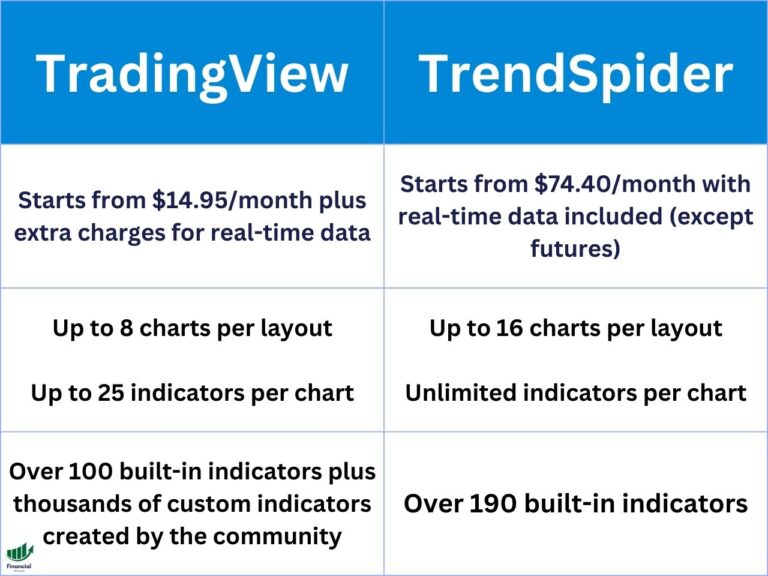
For deeper charting on either platform, traders typically pair the brokerage account with TradingView. Robinhood integrates directly with TradingView for a subset of order routing through the broker plug-in. SoFi does not yet support a TradingView broker integration.
Mobile App Deep Dive
Both apps are well-rated on the App Store and Google Play, but the design priorities are different.
Robinhood’s app is built for fast execution. The order ticket is one tap from any chart, options chains load on a swipe, and the watchlist surfaces price-change leaders by default. Charting is more capable than most retail apps, with multiple time frames and a handful of indicators.
SoFi’s app is built for a financial dashboard. Investing sits next to checking, savings, loans, credit score, and credit card in a single bottom-nav. Trading is fewer taps from a deposit or a savings transfer, which suits investors who treat investing as a slice of overall money management rather than a daily activity.
Banking and Cash Management
Robinhood offers a Cash Card with a spending account, round-up investing, and stock-reward rotations on debit purchases. The Cash Card is FDIC-insured through partner banks. There is no Robinhood checking account in the traditional sense.
SoFi is a chartered bank. SoFi Money runs a high-yield checking and savings account with FDIC insurance through SoFi’s network of partner banks. Direct deposit unlocks the highest APY tier. The same login covers brokerage, banking, loans, and credit card; for users who want one app for everything financial, this is the strongest single argument for SoFi.
Promotions and Sign-Up Bonuses
Both platforms run active referral programs.
Robinhood offers a free stock when you sign up through a referral link (typically a stock valued between $5 and $200, with the bulk of payouts at the lower end). Robinhood Gold also runs a periodic deposit-match bonus on transfers in; verify on the live offer page.
SoFi runs a sign-up bonus that varies by product (typically a cash bonus tied to a qualifying deposit or a direct-deposit setup). SoFi rotates the offer; check the active terms when you sign up. Both bonuses are typical of the retail-brokerage industry and should not drive the platform decision on their own.
Customer Support
Both platforms offer in-app messaging and phone support. Robinhood’s support quality has improved markedly since 2021 and now includes a callback system that books a slot rather than holding the line. SoFi’s customer support extends to the banking and lending side, which means a single agent can move across products in one call.
A genuine SoFi differentiator: free access to a Certified Financial Planner with a Series 65 designation, included with an active investing account at no extra charge. Most retail brokerages charge an advisor fee for this. If you want occasional professional input on a portfolio without paying a 1% AUM fee, SoFi is the only one of these two that offers it built in.
Safety and Regulation
Both Robinhood and SoFi are regulated by the SEC and FINRA. Both are SIPC members; cash and securities are protected up to $500,000 ($250,000 cash sublimit). SoFi Money additionally holds FDIC insurance through partner banks (separate protection for cash, not securities).
Both platforms have had regulatory action in the past several years. Both are on solid regulatory footing today, and neither’s regulatory history should drive the platform decision.
Pros and Cons Cheat-Sheet
Robinhood pros
- Zero commissions on stocks, ETFs, and options with no per-contract fees
- 22 cryptocurrencies on the same login
- Robinhood Legend free desktop platform with charting and multi-strategy options
- 3% IRA match with Gold ($5/month), the most aggressive on retail
- Extended-hours trading (24/5 on a select list of stocks)
Robinhood cons
- No mutual funds
- No joint accounts
- No traditional banking (Cash Card only)
SoFi pros
- Brokerage, banking, loans, and credit card under one login
- Mutual fund access
- Free CFP access with active investing account
- High-yield checking and savings (FDIC-insured)
- Robo-advisor (SoFi Automated Investing)
SoFi cons
- No cryptocurrency
- No desktop trading platform
- Options interface designed for casual buyers, not active traders
- IRA match caps at 1% (versus Robinhood’s 3% with Gold)
Ideal User Profiles
You will get more out of Robinhood if you trade options or want zero-cost options execution, want exposure to crypto without opening a separate account, use desktop tools for charting and active trading, prioritize the IRA match rate over banking integration, or place trades during extended hours.
You will get more out of SoFi if you are a buy-and-hold investor or retirement-focused, want brokerage and banking in one app, use mutual funds as part of your asset allocation, want occasional professional advice without paying an AUM fee, or care about a fully chartered bank rather than a partner-bank fintech.
For traders who fall in neither bucket cleanly, see E*TRADE vs. thinkorswim, Robinhood vs tastytrade, or Robinhood vs TradingView for additional platform comparisons.
Tracking Trades on Robinhood or SoFi
Whichever platform you pick, both lack post-trade analytics that go beyond a basic activity statement. Neither breaks out win rate by symbol, by strategy, or by hold duration; neither calculates profit factor; neither tracks setup type alongside the trade.
The Financial Tech Wiz Trading Journal auto syncs with Robinhood and imports your available trade history (you select the date range during import), then breaks down win rate and P&L by symbol and hold duration. SoFi is not yet supported for auto sync; SoFi traders can log and track trades by hand on a free account until the connector is available.
Financial Tech Wiz / Free resources
Build a clearer picture of your trading.
Start with a free journal account. Keep your trades organized, review your results, and build a consistent review routine.
Your free journal account includes the template and tools by email:
- Free Google Sheets and Excel trading journal template
- Indicators, watchlists, and scanners
- Access to the free trading community
Ready for automatic trade tracking? Explore the Financial Tech Wiz Trading Journal.
Free journal. No card needed.
FAQ
Is SoFi better than Robinhood?
Neither platform is universally better; the right choice depends on what you plan to do. SoFi wins for long-term investors who want banking integration, mutual funds, and free advisor access. Robinhood wins for active traders, options players, crypto investors, and anyone chasing the highest IRA match rate.
Can I transfer my Robinhood account to SoFi?
Yes. SoFi accepts inbound ACATS transfers from Robinhood. Initiate the transfer from the SoFi side; expect Robinhood to charge a $100 outgoing ACAT fee. SoFi periodically reimburses transfer fees as part of a sign-up promotion; check the live offer.
Does SoFi offer crypto trading?
No. SoFi exited cryptocurrency trading in December 2023. Existing SoFi crypto holders received the option to transfer balances to a third-party platform; new SoFi accounts cannot trade crypto. Use Robinhood (or a dedicated crypto exchange such as Coinbase) if crypto exposure is part of your strategy. The Coinbase link is a referral link that may provide compensation to Financial Tech Wiz at no additional cost to you.
Can I buy fractional shares on both Robinhood and SoFi?
Yes. Both Robinhood and SoFi support fractional share investing on stocks and ETFs, with minimum order sizes typically around $1.
Related Trading Platform Comparisons
Interactive Brokers vs. Tradovate
Financial Tech Wiz / Free resources
Build a clearer picture of your trading.
Start with a free journal account. Keep your trades organized, review your results, and build a consistent review routine.
Your free journal account includes the template and tools by email:
- Free Google Sheets and Excel trading journal template
- Indicators, watchlists, and scanners
- Access to the free trading community
Ready for automatic trade tracking? Explore the Financial Tech Wiz Trading Journal.
Free journal. No card needed.