My SPX Options Strategy: Selling Puts and Managing Risk

SPX options let me build S&P 500 exposure with a strategy that is more involved than buying an index fund. My approach has included selling puts and purchasing long puts as a hedge, but the positions carry real market, volatility, and expiration risk. This guide explains the structure, the decisions I track, and the situations where the approach may not fit a trader.
Key Takeaways
- My SPX options strategy uses short puts to seek index exposure and long puts as a hedge; neither leg makes losses impossible.
- SPX options are cash-settled and European-style, while SPY options involve an ETF and have different exercise and settlement mechanics.
- Before opening a trade, define risk, expiration, hedge cost, position size, and exit conditions. A strategy is not proven by one backtest or a few profitable trades.
Build a consistent review process
Financial Tech Wiz Trading Journal
Record the entry, risk plan, hedge, and outcome so you can review your decisions across trades instead of relying on memory.
Review your trading processWhat I mean by an SPX options strategy
SPX options are options on the S&P 500 Index. They are different from options on SPY, which is an exchange-traded fund that tracks the index. My strategy has been to sell puts on SPX, SPY, or /MES depending on the exposure and account risk I am considering, then use some of the collected premium to buy long puts. The purpose is to combine a put-selling position with a hedge. That description is a record of my approach, not a recommendation to copy a specific contract or trade.
A short put creates an obligation tied to the index level at expiration. If the index falls below the strike, the option can lose value quickly, and a short option can create substantial losses. Buying a separate put can offset some losses in some outcomes, but the amount of protection depends on the long put’s strike, expiration, and premium. A hedge is a position with its own price and timing. It is not a guarantee that the combined portfolio will avoid a loss.
The strategy also should not be reduced to the phrase “sell puts for income.” Premium is received when a short option is opened, but the trade can lose more than that credit. The credit is compensation for accepting the option exposure, not a return that is earned automatically. I look at the possible loss and the effect on the whole portfolio before deciding whether the premium is worth the risk.
For a refresher on the mechanics of a put secured by cash, see the cash-secured put guide. SPX contracts have index-based notional exposure, so the cash amount needed for a position depends on broker rules, account type, the contract, and any offsets. Do not assume that a broker’s margin requirement is the same as the trade’s maximum possible loss.
Why I use options instead of simply buying SPY
A buy-and-hold position and an options position have different payoff shapes. Buying shares of an index ETF participates in changes in share price and distributions. A short put has a limited maximum gain equal to the premium received, before costs, and can lose value as the underlying falls. A long put hedge adds a separate payoff that may help below its strike, but it also costs premium and may expire with no value.
My interest in short puts is the way they create a defined options exposure with a specific strike and expiration. That flexibility comes with extra decisions: contract selection, volatility, expiration, liquidity, margin, rolling, and risk limits. Holding an ETF may be simpler for a person whose goal is broad index exposure without active option management. The choice depends on the goal, experience, resources, and tolerance for loss.
SPX versus SPY is not just a question of which ticker has a lower quoted option premium. SPX is an index option with a multiplier of 100, while SPY is an ETF option with a multiplier of 100 shares. SPX options are generally European-style and cash-settled. SPY options are American-style and can result in delivery or receipt of ETF shares if exercised. Contract specifications can differ by series, so confirm the exact product and expiration before placing an order. The SPX versus SPY comparison covers those mechanics in more detail.
SPX’s multiplier also means that a quoted premium is multiplied by 100 to get the contract amount before fees. A quote of 10.00 represents $1,000 per contract, not $10. That does not make the trade good or bad by itself; it means the notional and dollar risk can be large. Traders comparing index products can also review options on futures and use an options profit calculator to inspect a specific payoff. A calculator shows the assumptions entered. It cannot forecast where the index will settle.
Understand settlement before choosing an expiration
Cboe describes SPX options as cash-settled and European-style. Cash settlement means an in-the-money contract is settled in cash instead of delivering shares of the index. European-style exercise means the holder exercises only at expiration; it does not mean the position can only be closed on expiration day. A trader can generally close an open option by placing an offsetting trade during the contract’s trading hours. The exact hours and settlement value depend on the contract series.
SPX and SPXW expirations can have different settlement conventions. Some series use an opening settlement value and others use a closing value. Trading hours for an expiring contract can also differ from the regular session. A position held through expiration can therefore behave differently from one closed earlier. I check the current Cboe SPX specifications before relying on a particular expiration detail. I do not treat “SPX” as enough information to infer the last trading time or settlement calculation.
This distinction matters when a plan depends on a particular closing price, a hedge that expires on another date, or a short option close to the money. The settlement process can produce a cash debit or credit based on the contract’s official settlement value. The index level shown by a chart at a moment during the session is not necessarily the value used to settle an expiring contract. Check the series identifier, expiration, settlement type, and the broker’s handling rules.
Options also have market and operational risks that are separate from the strategy thesis. Bid-ask spreads can widen, orders may fill at worse prices than expected, and a fast move can leave little time to adjust. A hedge with a later expiration may continue after the short option settles; a hedge with the same expiration may not track the short position perfectly at every point. Plan for those differences before entry, not during a volatility spike.
How I think about the short put and the long put hedge
A short put benefits if the index stays above the strike through expiration, all else equal. It can lose value if the index falls, implied volatility rises, or the contract has more time value than expected. A long put may gain value as the index falls or volatility increases, but it has a premium cost and its own expiration. The result of the combined position depends on how those pieces interact, not on the short put in isolation.
Strike selection is a tradeoff between the premium collected and the price exposure accepted. A strike farther below the index may collect less premium, while a closer strike can carry more sensitivity to a decline. Delta is often used as a sensitivity estimate, but it is not a promise that the option has a precise probability of expiring in or out of the money. It can change as price, volatility, and time change.
Expiration selection changes how quickly the position responds to movement and time decay. A short-dated option can lose time value quickly, but it can also become highly sensitive to a rapid index move as expiration approaches. A longer expiration may give the position more time to be affected by market changes and tie up risk for longer. Neither duration is automatically safer.
The long put hedge needs its own decision. I consider what loss it is meant to reduce, the level where it starts helping, how long it needs to remain active, and how much premium I am willing to spend. If a hedge is far below the short put, it may do little in a modest decline. If it is closer or more expensive, the position may have a different cost and payoff. Mismatched strikes and expirations can leave periods when protection is weaker than expected.
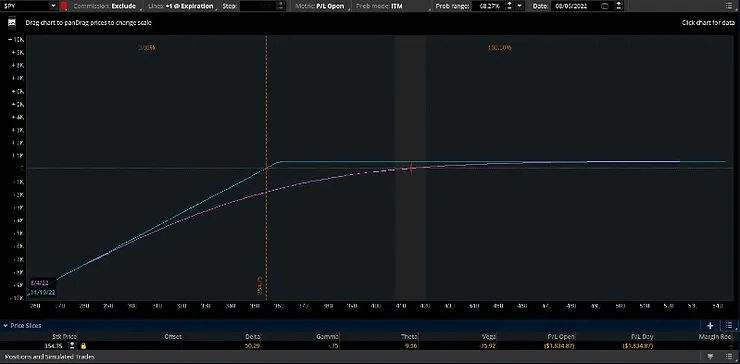
One way to make the hedge discussion concrete is to compare outcomes at several index levels. For example, imagine a short put with a 5,000 strike and a long put with a 4,800 strike. If the index settles at 4,950, the short put is in the money by 50 points and the 4,800 long put is still out of the money. The long put has not offset that short put loss at that settlement level. If the index settles below 4,800, both options may have intrinsic value, and the long put begins to offset additional downside below its strike. Premiums, expiration, fees, and the actual settlement value change the result. This is a simplified illustration, not a live trade or a forecast.
A separate defined-risk put spread is another way traders may cap a position’s expiration loss. For example, if a trader sells a put and buys a lower-strike put with the same expiration, the strike width limits the spread’s maximum loss before costs. A ten-point-wide spread with a two-point credit has $200 of maximum credit and $800 of maximum loss per contract, using the $100 multiplier. That is not the same position as my short put plus a separate hedge. It is included to show how defined risk can be calculated before entry.
Volatility, probability, and premium
Option premium reflects several inputs, including the index level, strike, time to expiration, interest rates, distributions, and implied volatility. Implied volatility is the market estimate of future movement embedded in option prices; it is not a forecast that the index will move by exactly that amount. If implied volatility falls after a position is opened, an option price can change even when the index is close to where it started. If volatility rises during a selloff, short options may become more expensive to close at the same time that the index is moving against them.
The phrase volatility risk premium describes the difference between implied and subsequently realized volatility. It can help frame why option selling is attractive to some traders, but it does not mean the premium is free or that implied volatility will always exceed realized volatility over the period that matters to a particular trade. A rare but severe move can outweigh many smaller premium collections. A trader should test how the approach behaves during different market environments and include execution costs in the test.
Delta can help compare the current sensitivity of one option with another, while other measures describe how sensitivity changes as price and time change. These measures update continuously and depend on model assumptions. I treat them as inputs for comparing scenarios, not as stand-alone instructions. A delta that appears small at entry can change sharply when the index drops or volatility expands. The practical question is what the whole position could be worth at a range of index levels, dates, and volatility assumptions.
Rolling is a new decision
Rolling an option means closing the current contract and opening another one, often at a later expiration or different strike. It does not erase the result of the first trade, and a credit on the new position does not prove the combined sequence has reduced risk. The new contract has its own premium, exposure, expiration, and possible loss. I record the realized result of the closed leg separately from the new position so a fresh trade is not mistaken for recovery of an earlier loss.
Before rolling, I compare the cost to close, the credit or debit to open the replacement, and the amount of new risk being accepted. I ask whether the original thesis still applies and whether I would open the replacement position if I had no existing trade. If the answer is no, the roll may be serving as a way to postpone a decision rather than manage risk. A rule that requires a roll should name the market condition and loss threshold that trigger it.
Roll timing can also change the hedge relationship. A short put rolled to another expiration may no longer line up with a long put that was purchased for the earlier period. That can leave a gap in protection or extend exposure beyond the period originally planned. I check each leg’s expiration after an adjustment and recalculate the combined payoff before treating the position as hedged.
Account for events and overnight moves
Index options can be affected by scheduled economic data, central bank decisions, earnings from large index constituents, geopolitical events, and unexpected news. A position held through an event may see a gap between one trading session and the next. A stop order or target price cannot guarantee a particular execution price through a gap, and a model built from end-of-day data may not show the path the position took intraday.
That is one reason I separate the trade thesis from the management plan. The thesis describes what I expect from the index or volatility. The management plan describes what I will do if price, volatility, time, or account buying power changes. Before entry, I note which events are on the calendar and whether I intend to carry the position through them. If the plan depends on being able to adjust immediately, I consider whether I will actually be available and whether the contract is liquid at that time.
Position size starts with the loss, not the premium
I start by asking how a loss would affect the account if the index moved sharply against the position. For a naked short put, there is no lower long put in the same expiration to cap the payoff. If the underlying index fell substantially, the loss could be large relative to the credit received. A distant hedge might eventually offset part of the decline, but it does not turn a short put into a defined-risk spread.
Account size alone does not tell a trader how many contracts to open. The relevant figures include the contract multiplier, strike, premium, hedge cost, available margin, existing portfolio exposure, and the planned exit. A one-contract position can still have substantial dollar exposure. Multiplying the premium by 100 shows the credit or cost; it does not show the full loss for a short option.
I avoid sizing from the best-case scenario. Before entry, I write down what happens if the index falls by a moderate amount, gaps lower overnight, or moves through both the short and long put strikes. I also consider the effect of a volatility increase, changes in buying power, and the possibility that I cannot exit at the modeled price. A payoff graph is a useful map of stated assumptions. It does not include every real-world fill or account constraint.
Traders should be cautious about treating historical volatility or a backtest as a guarantee. Backtests depend on the data, dates, execution assumptions, fees, slippage, strike rules, and management logic used. A short put strategy can look different when tested on another period or with different exits. A backtest may help ask a question, but it cannot establish that future returns will resemble the past.
There is also a difference between a theoretical maximum loss and the amount of money a broker may require to hold a position today. Buying power can change with volatility or brokerage policy. A position that fits the account under one margin calculation can become harder to carry after a fast move. Read the broker’s current options disclosure and margin terms, and do not use the smallest displayed requirement as a substitute for a loss limit.
A pre-trade checklist for an SPX options strategy
Before opening a position, I want the trade thesis to fit into a sentence. If I cannot explain what market condition I expect, what the options position gains from, and what would prove the idea wrong, I need more work before entry. A simple explanation also helps separate a directional view from an assumption that implied volatility is mispriced.
- Underlying and series: Confirm SPX, SPXW, or another product; verify the contract multiplier, expiration date, settlement type, and trading hours.
- Position shape: List every leg, its side, strike, expiration, and quantity. Calculate the combined payoff rather than reviewing one option in isolation.
- Risk limit: Write the possible loss at several index levels, the effect on account equity, and the point where you will reduce or close the trade.
- Hedge plan: State what loss the long put is intended to reduce, when it begins to help, what it costs, and whether its expiration matches the exposure it is meant to hedge.
- Volatility and event risk: Review current implied volatility and scheduled events that could cause a sharp move. Volatility can rise even when the index has not yet moved much.
- Exit and adjustment: Decide in advance how you will handle a profit target, an adverse move, an approaching expiration, a wider spread, or a changed margin requirement.
- Execution: Check liquidity and use limit orders when appropriate. Include fees and plausible slippage in the payoff you review.
These questions are not a formula for predicting an outcome. They are a way to make the trade’s assumptions visible before capital is at risk. A plan should include a reason to close or reduce the position. “I will watch it” is not a risk rule, particularly for a contract that may move quickly near expiration.
Review the decisions behind each trade
Financial Tech Wiz Trading Journal
Track entries, exits, notes, and portfolio performance in one place so you can compare your process across market conditions.
Explore the trading journalReview each trade after it closes
A trade journal can help distinguish a repeatable process from a good or bad outcome. I record the position structure, thesis, entry conditions, intended hedge, planned exit, and any adjustments. After closing, I compare the result with the original plan. If the position changed along the way, the record should show what changed and why.
For an SPX options position, useful notes may include the index level, volatility context, days to expiration, short and long strikes, premium paid or received, fees, and the reason for closing. The purpose is not to create more fields than a trader can maintain. It is to capture enough context to revisit the decision later and understand whether the realized result came from the original idea, an adjustment, or an unexpected market move.
I also separate strategy review from outcome review. One profitable position does not prove that the entry was sound, and one loss does not prove that a plan was flawed. Across a series of trades, look for whether risk stayed inside the stated limits, whether hedges behaved as expected, and whether changes were made for reasons that can be explained. A review can show where the process needs work without promising that the next trade will perform better.
The paid Financial Tech Wiz Trading Journal is built for structured trade tracking and performance review. For a broader comparison of journaling options, read our guide to the best trading journals. Traders who want to start with a spreadsheet can use the free trading journal template and record the same basic decisions before moving to a more detailed workflow.
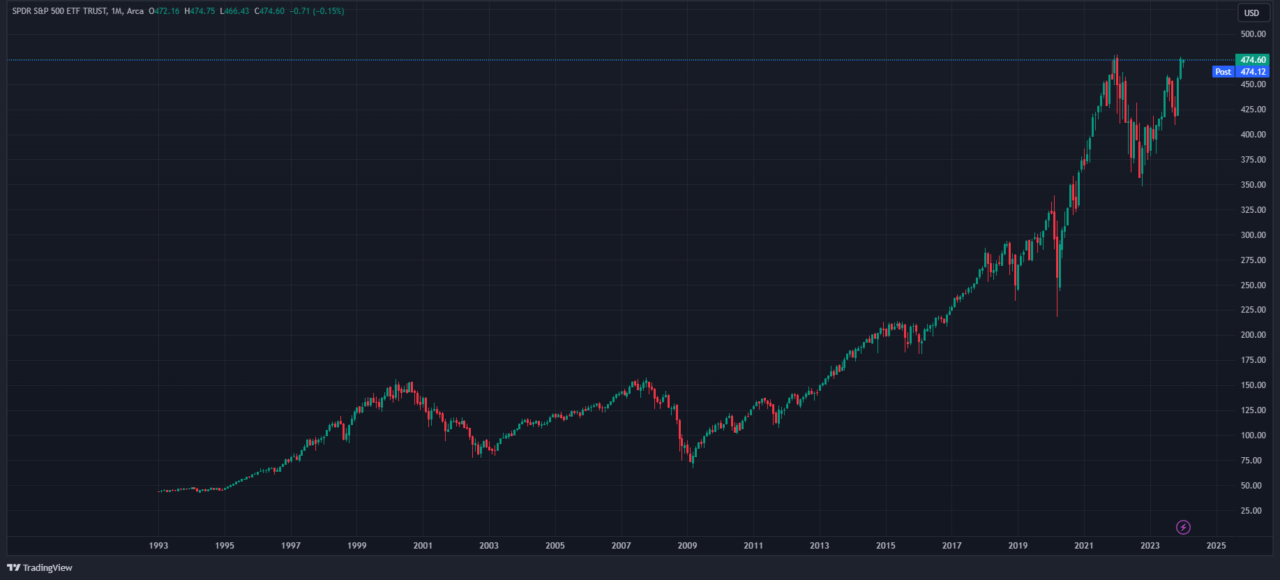
When I review an index chart, I may use TradingView to see price history and mark levels. A chart can help document what price did; it does not prove that a strategy has positive expectancy. I may receive compensation if you sign up through this TradingView link. This does not change the price you pay.
When this approach may not fit
A short-put approach may not suit someone who cannot tolerate a large drawdown, does not understand option settlement, or cannot monitor the position when the market moves. It may also be a poor fit for an account whose buying power is needed for other obligations. These are not edge cases to solve after entering. They are reasons to choose a simpler exposure, use smaller risk, or avoid the trade.
Traders who want a fixed loss may prefer to study defined-risk spreads rather than assume a separate long put will offset all risk. A spread also has tradeoffs: the long option costs premium, limits how the position behaves, and can change the expected credit. Before using any structure, calculate its maximum gain and loss with the exact strikes and contract multiplier.
People who want broad market exposure without managing option legs may prefer a diversified fund or another approach they understand. Buying and holding an ETF has market risk, but it does not require the same expiration, settlement, and margin decisions as a short SPX option. The right comparison is not which approach can make more in a selected period. It is whether the exposure matches the investor’s goals and ability to accept losses.
No single options structure is “the best” in every market. Trend, volatility, time horizon, liquidity, capital, taxes, and execution access all matter. The trade that appears attractive in a payoff chart can still be a poor fit for the person who cannot carry its adverse outcome. Make the decision using current contract terms and your own risk constraints.
SPX options strategy questions
Is SPX a good investment?
SPX is an index, and an SPX option is a derivative contract rather than a direct investment in the 500 companies. Whether an options position makes sense depends on the structure, price, risk, time horizon, and the trader’s circumstances. A short put can lose substantial value if the index declines. Consider the exposure and possible loss, not just the premium.
What is the best SPX options strategy?
There is no strategy that is best for every trader or market. A short put, a put spread, a long option, or an index fund creates a different payoff and different risks. Start with the market exposure you want, then compare the position’s maximum loss, likely sensitivity, expiration, and costs. Do not assume a high win rate makes a strategy profitable if the losing trades are large.
Why are SPX options so expensive?
SPX option prices are quoted in index points, and the contract multiplier is 100. Multiply the quote by 100 to see the contract’s premium in dollars before fees. The index level, strike, expiration, implied volatility, and market conditions all affect the quoted option price. Comparing only the premium without the multiplier can understate the dollar amount at risk.
Sources and further reading
For current product details, review Cboe’s SPX contract specifications and its 0DTE options resources. The Options Industry Council explains equity and index option differences. Contract specifications and trading hours can change, so check the current series information with your broker and the exchange before placing an order.
Financial Tech Wiz / Free resources
Build a clearer picture of your trading.
Start with the free trading journal template. Keep your trades organized, review your results, and build a consistent review routine.
- Free Google Sheets and Excel trading journal template
- Indicators, watchlists, and scanners
- Access to the free trading community
Ready for automatic trade tracking? Explore the Financial Tech Wiz Trading Journal.
Free resources + trading emails. Unsubscribe anytime.